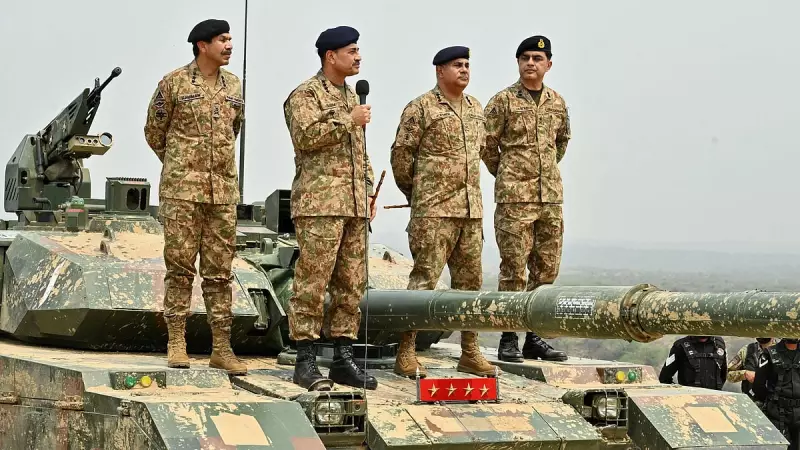
In a significant and potentially regretful decision, Pakistan has substantially elevated the authority of its Army Chief, placing him in sole charge of the country's nuclear weapons systems. This move, reported by Bloomberg Opinion, effectively raises the military leader above the heads of the other two armed forces and centralizes critical command authority.
A Centralization of Power
The development, noted on November 20, 2025, marks a pivotal shift in Pakistan's command and control structure. The army chief has now been positioned with unprecedented individual authority over the nation's nuclear weapons systems. This decision sidelines the leaders of the Pakistani Air Force and Navy from the traditional tri-services command hierarchy concerning the strategic arsenal.
This consolidation of power into a single military office is seen by many analysts as a step back for the nation's democratic framework. It signals a deepening of the military's influence in spheres that are typically under civilian oversight or, at the very least, a collective military command.

Implications for Pakistan and Regional Stability
The repercussions of this decision extend beyond Pakistan's domestic politics. Granting a single military officer sole command of nuclear weapons raises questions about procedural checks and balances. In a region already fraught with geopolitical tensions, such a concentration of power is a subject of intense international scrutiny.
This move is interpreted as the Pakistani military reinforcing its dominant role in the country's governance. It underscores the persistent struggle for power between civilian institutions and the powerful military establishment, often cited as a source of political instability in Pakistan.
A Regretful Decision for Democracy?
The Bloomberg Opinion piece frames this development as a potentially regretful decision. By allowing the army back into a position of singular, unchecked authority over its most powerful weapons, Pakistan may be compromising long-term democratic stability for short-term command efficiency.
This action not only affects the internal balance of power but also sends a clear message to the international community about the direction in which the nation is heading. The world will be watching closely how this renewed and enhanced military authority impacts South Asia security dynamics and the delicate political equilibrium within Pakistan itself.