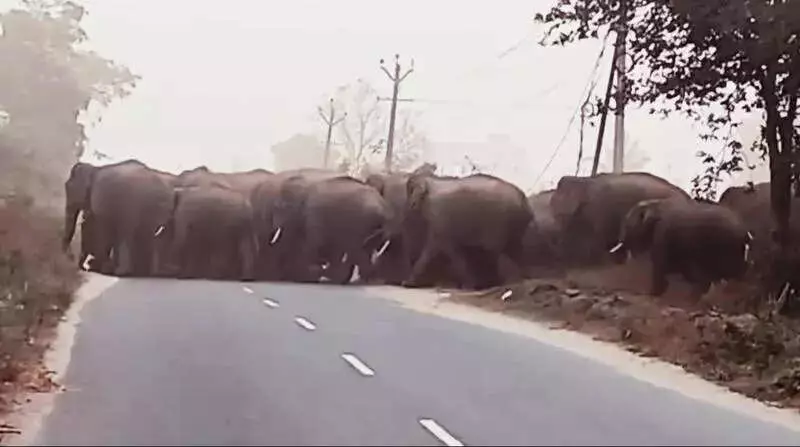
The forest department in Krishnagiri has sounded a high alert for more than twenty villages in the region after over seventy wild elephants established camps in the vicinity of Hosur. This significant movement of jumbos has prompted urgent measures to prevent human-animal conflict and protect agricultural land.
Massive Herd Movement Triggers Emergency Response
Authorities have deployed a team of twenty forest officials to continuously monitor the movements of the large elephant groups. Their primary task is to carefully herd the animals back into the deeper, safer sections of the forest. The villages under alert include Sanamavu, Birjepalli, Uddanapalli, Sinigiripalli, and Kelamangalam, where the presence of the elephants poses a direct threat.
Tracking the Elephant Migration Path
This situation traces back to a major migration event in October, when a herd of approximately 150 elephants journeyed from the Bannerghatta forest in Karnataka. They entered the Tamil Nadu region via Jawalagiri, heading towards the Hosur Cauvery north wildlife sanctuary. Upon arrival, the large group splintered into several smaller herds, dispersing to different areas including Anchetty, Denkanikottai, Odedurgam, and the Hosur Sanamavu region.

In recent developments, forest personnel managed to guide a group of forty elephants from the Sanamavu area in Hosur into the Denkanikottai forest range on Sunday. However, these elephants were still reported to be loitering in the Denkanikottai area as of Monday. Simultaneously, two other herds, comprising about thirty elephants, remained camped near Sanamavu within the Hosur forest division.
Heightened Precautions for Local Communities
The forest department has issued stern warnings and safety guidelines to local farmers, citing a clear and present danger of elephants straying into farmlands. Such incursions could lead to substantial damage to crops and pose serious safety risks to individuals.
A forest official explicitly advised the farming community to avoid being alone at night guard posts near fields. Furthermore, the department has prohibited farmers from taking their livestock, such as goats and cows, for grazing in forest fringes until the elephant herds are successfully driven back to their core habitats. This precaution is critical to prevent accidental encounters that could endanger both human and animal lives.
The department's strategy involves a combination of vigilant monitoring and gentle driving techniques to encourage the elephants to retreat. The ongoing operation highlights the challenges of managing wildlife corridors in regions where human settlements and forest boundaries intersect.