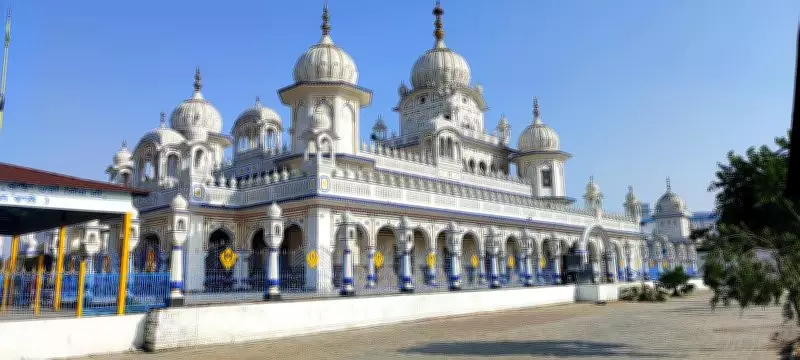
Noordi Sran, a historic resting place located in the outskirts of Amritsar, holds immense significance as the burial site of several emperors and notable historical figures. This ancient necropolis, often overlooked by mainstream tourism, offers a unique glimpse into the region's rich past, dating back to the Mughal and Sikh eras.
Historical Background
The site, also known as the 'Noordi Sran Graveyard,' is believed to have been established during the reign of the Mughal Empire. It served as a final resting place for emperors, princes, and high-ranking officials. The name 'Noordi' is derived from 'Noor,' meaning light, and 'Di,' meaning of, while 'Sran' refers to a royal lineage. Thus, Noordi Sran translates to 'the light of the royal lineage.'
Architectural Significance
The tombs at Noordi Sran showcase a blend of Mughal and Sikh architectural styles. Intricate marble work, domed structures, and ornate carvings reflect the craftsmanship of the era. The main mausoleum, dedicated to a prominent emperor, features a large central dome surrounded by smaller domes, similar to the architectural style of the Taj Mahal but on a smaller scale.

Burial of Emperors
Among the notable figures buried here are Mughal Emperor Shah Jahan's son, Dara Shikoh, and several Sikh chieftains. Dara Shikoh, known for his liberal views and patronage of arts, was executed by his brother Aurangzeb. His tomb is a major attraction for history enthusiasts. Additionally, the site contains the graves of many unknown soldiers and nobles, adding to its historical depth.
Cultural Importance
Noordi Sran is not just a burial ground but a cultural landmark that reflects the syncretic traditions of Punjab. It has been a place of pilgrimage for both Muslims and Sikhs, symbolizing the region's pluralistic heritage. However, due to neglect and lack of preservation, the site has suffered damage over the years. Efforts are being made by local historians and the Archaeological Survey of India to restore and protect this heritage site.
Current State and Preservation
Today, Noordi Sran is slowly gaining attention from tourists and scholars. The site is under the protection of the Archaeological Survey of India, but more needs to be done to prevent further decay. Local communities have initiated clean-up drives and awareness campaigns to highlight its importance. The government has also allocated funds for restoration, aiming to revive the grandeur of this historic necropolis.
Visiting Noordi Sran
For those interested in history and architecture, Noordi Sran offers a serene and educational experience. Located about 15 kilometers from Amritsar city center, it is accessible by road. The best time to visit is during the winter months from October to March. Visitors are advised to respect the sanctity of the site and follow guidelines to help preserve it for future generations.
In conclusion, Noordi Sran stands as a testament to the rich and diverse history of Punjab. Its tombs and monuments tell stories of emperors, artists, and warriors who shaped the region's destiny. Preserving this site is crucial for maintaining the cultural fabric of India.