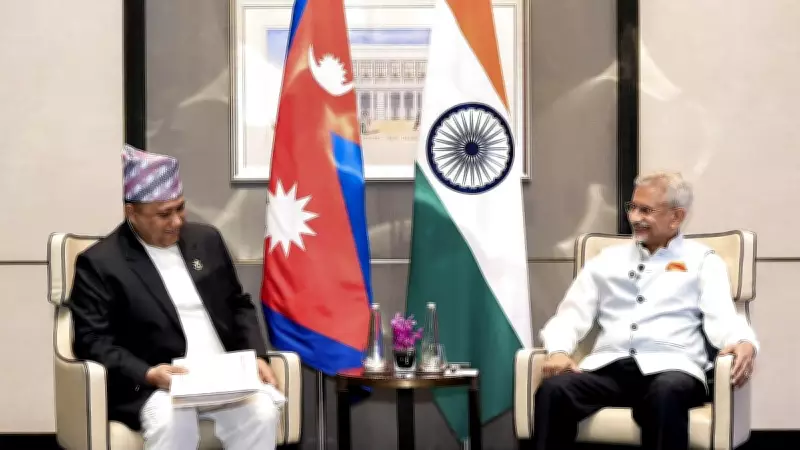
Nepal has expressed strong opposition to the bilateral agreement between India and China facilitating the Kailash Mansarovar Yatra through the Lipulekh Pass. Kathmandu maintains that the pass lies within its sovereign territory and has called for a diplomatic resolution to the long-standing border dispute.
Nepal's Stance on Territorial Integrity
The Nepalese government reiterated its claim over the Lipulekh Pass, which it considers an integral part of its territory. Officials in Kathmandu have consistently objected to any arrangement that bypasses Nepal's sovereignty. The latest India-China pact, which allows Indian pilgrims to travel to the Kailash Mansarovar region via this route, has been met with formal protests from Nepal.
Call for Bilateral Dialogue
Instead of accepting the bilateral deal, Nepal has urged both India and China to engage in trilateral discussions to address the territorial concerns. The Nepalese foreign ministry emphasized that dialogue is the preferred path to resolve the issue amicably and in accordance with international norms. Nepal believes that any unilateral or bilateral actions that ignore its claims could undermine regional stability.

Historical Context of the Dispute
The Lipulekh Pass has been a point of contention for decades. Nepal argues that historical maps and treaties support its claim, while India considers the pass part of its Uttarakhand state. The Kailash Mansarovar Yatra, a sacred pilgrimage for Hindus, has traditionally been conducted through this pass, but Nepal's objections have added a new layer of complexity to the route.
Reactions from India and China
India has maintained that the arrangement with China is purely bilateral and does not involve Nepal's territorial claims. New Delhi has expressed willingness to discuss the matter with Kathmandu but insists that the yatra arrangements are in the interest of pilgrims. China, on the other hand, has not publicly commented on Nepal's objections but has supported the bilateral framework with India.
Implications for Regional Relations
The dispute highlights the delicate balance in South Asian geopolitics. Nepal, strategically located between India and China, often finds itself navigating competing interests. The Kailash Mansarovar Yatra issue could impact Nepal's relations with both neighbors, potentially influencing trade, security, and diplomatic ties.
Way Forward
Analysts suggest that a trilateral meeting could help de-escalate tensions. Nepal has proposed using existing bilateral mechanisms to address the issue, while also seeking support from international forums. The coming months will be crucial in determining whether dialogue can bridge the differences or if the dispute will escalate further.