Voters in Myanmar headed to the polls on Sunday, December 28, 2025, for the first phase of a long-awaited general election, the first such exercise in five years. The vote, orchestrated by the country's military government, unfolds against a backdrop of widespread civil conflict and severe political repression across the nation.
A Multi-Phase Process with a Predetermined Outcome
The electoral process is being conducted in three distinct rounds. The initial phase covered 102 of Myanmar's 330 townships. The second and third phases are scheduled for January 11 and January 25, 2026, respectively. The final results are not expected to be announced until February.
While over 4,800 candidates from 57 parties are technically in the fray for national and regional legislatures, only six parties are competing nationwide. The military-backed Union Solidarity and Development Party (USDP) is widely seen as the strongest contender, benefiting from an organised structure and significant resources. It is anticipated that the election will culminate in Senior General Min Aung Hlaing, the leader of the 2021 coup, assuming the presidency.

Widespread Condemnation and a Climate of Fear
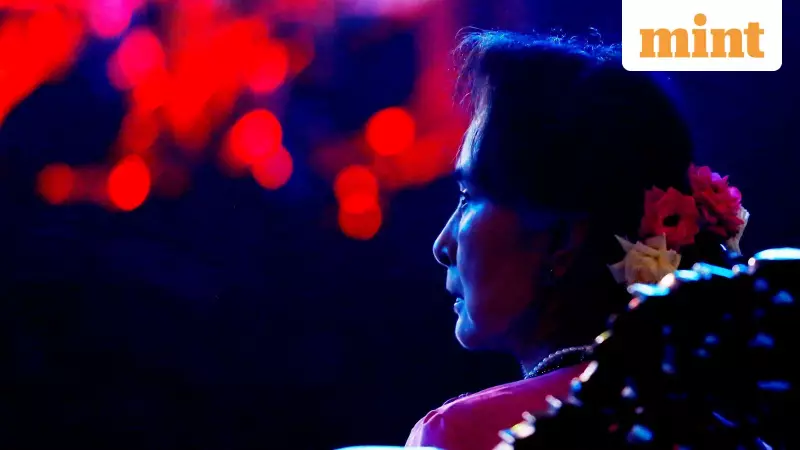
Critics, opposition groups, and international observers have uniformly dismissed the election as a sham designed to provide a veneer of legitimacy to military rule. The process has been fundamentally compromised by the exclusion of popular opposition forces, most notably Aung San Suu Kyi's National League for Democracy (NLD), which was dissolved in 2023. Suu Kyi herself, now 80, remains imprisoned on what are widely considered politically motivated charges.
The environment for the vote is one of intense repression. An Election Protection Law criminalises most criticism of the polls. According to rights groups, more than 22,000 people are detained for political offences, and security forces have killed over 7,600 civilians since the takeover. Furthermore, there are credible reports from independent media and organisations like the Assistance Association for Political Prisoners that authorities used threats and intimidation to compel people to vote.
"I have to go and vote even though I don't want to, because soldiers showed up with guns to our village to pressure us yesterday," said a woman named Khin from Mon state, who feared arrest if fully identified.
Regional Pragmatism vs. Western Sanctions
The military government's decision to hold an election creates a diplomatic dilemma. Neighbouring countries like China, India, and Thailand may use the vote as a rationale to continue engagement and support, arguing it is a step toward stability. In stark contrast, Western nations have maintained and upheld sanctions against Myanmar's generals, condemning their anti-democratic actions and violent crackdowns.
Tom Andrews, the UN Special Rapporteur on human rights in Myanmar, starkly summarised the global criticism in a social media post, calling the exercise "a theater of the absurd performed at gunpoint."
The election occurs as a brutal civil war, triggered by the military's violent response to peaceful protests in 2021, continues to rage. The conflict has displaced more than 3.6 million people, according to United Nations estimates, casting a long shadow over any claims of normalcy or national unity. For many voters, like 51-year-old Khin Marlar who fled her village due to fighting, participation was driven by a desperate hope for peace, not genuine political choice.