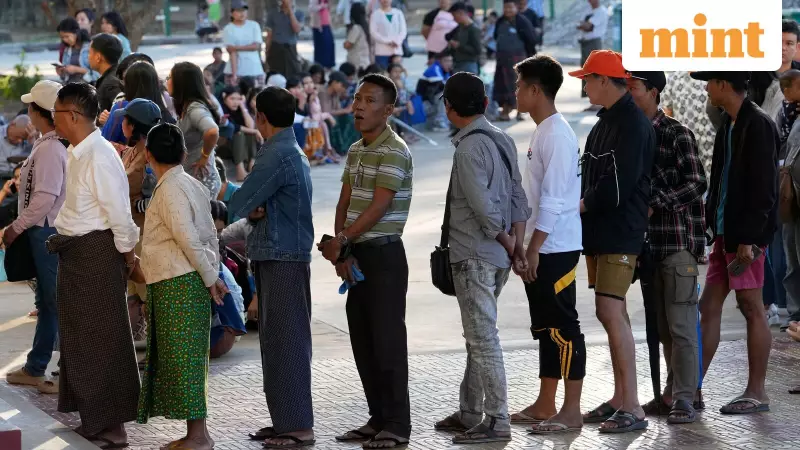
Voters in areas under military control in Myanmar participated in a staged election on Sunday, a process widely denounced by the international community as a fraudulent exercise designed to cement the junta's power. The phased polls, set to continue over the coming month, are expected to overwhelmingly favour the military-aligned Union Solidarity and Development Party.
International Condemnation and UN's Stern Rebuke
The United Nations led the global criticism of the electoral process. UN Special Rapporteur on Myanmar, Tom Andrews, starkly stated that a vote organised by a regime bombing civilians and imprisoning dissenters could not be genuine. He described the exercise as "a theatre of the absurd performed at gunpoint" and urged the world to reject any legitimacy from it. The UN's human rights chief and Western diplomats have similarly condemned the month-long election, highlighting the severe suppression of opposition.
A critical point raised by the United Nations in Myanmar is the detention of more than 30,000 political opponents since the 2021 coup. This includes members of the democratically elected government overthrown by the military. The country's most popular party, the National League for Democracy (NLD), has been barred from contesting. Its leader, Nobel laureate Aung San Suu Kyi, remains detained after being removed from office following the NLD's landslide win in the 2020 polls. The party itself has been dissolved.

Legal Crackdown and Staged Electoral Process
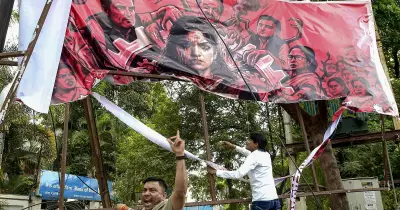
The junta has enacted harsh laws to silence any criticism of the elections. Over 200 people have been charged under a new law for obstructing or opposing the polls, with penalties ranging up to the death sentence. Several prominent cultural figures, including film director Mike Tee and actor Kyaw Win Htut, have been convicted under this legislation introduced in July.
According to the junta-appointed Union Election Commission, 4,863 candidates from 57 parties are participating. However, the field is dominated by military-aligned figures. Voting is scheduled in three phases across 265 of Myanmar's 330 townships, with the remaining areas deemed too unstable. The subsequent rounds are set for January 11 and January 25, with results expected by the month's end.
A Foregone Conclusion and Regional Instability
The election is being held amidst ongoing intense conflict and resistance across much of the country. With the main opposition eliminated, thousands arrested, and dissent criminalised, the outcome is seen as a predetermined step to formalise military rule under a civilian facade. The international community faces renewed calls to reject the process entirely, as analysts warn it will deepen Myanmar's crisis rather than offer any path to inclusive governance.