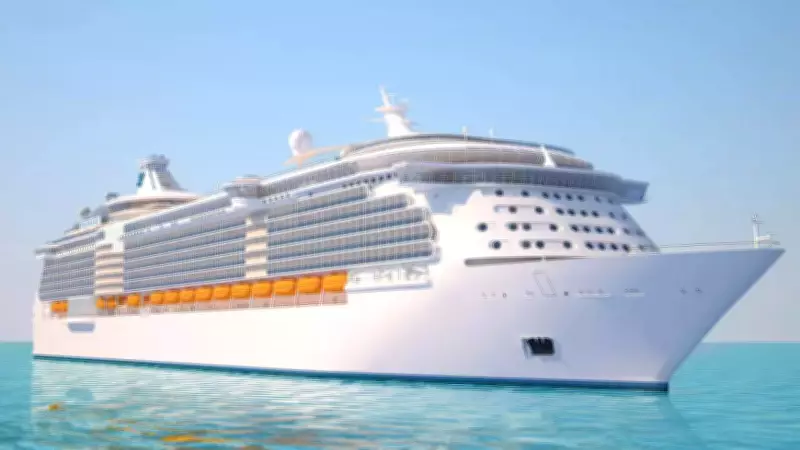
MUMBAI: For generations, Mumbai's harbour has served as India's gateway to trade and commerce, bustling with cargo vessels and merchant ships. Today, a different class of vessel is reshaping the city's waterfront economy — the cruise liner.
Unprecedented Growth in Passenger Traffic
The transformation is evident in the numbers. Mumbai, already India's largest cruise port, has witnessed a more than sevenfold increase in cruise passenger traffic over the past decade, cementing its position as the undisputed hub of the country's growing cruise tourism industry. Data from major ports reveals that Mumbai handled just 36 cruise vessels carrying 32,060 passengers in 2013-14. By 2025-26, passenger traffic had surged to 2.4 lakh, with 95 cruise vessel calls, underscoring the rapid expansion of sea-based leisure travel in India.
Economic Multiplier Effect
The growth story extends beyond tourism statistics. Industry experts highlight that every cruise passenger stepping ashore generates spending on transport, restaurants, hotels, shopping, guided tours, cultural attractions, and local services. As a result, cruise tourism creates a multiplier effect across the urban economy, benefiting businesses far beyond the port precincts.

Infrastructure Upgrades
The sector's evolution has accelerated with the commissioning of the Mumbai International Cruise Terminal, now the country's largest cruise facility. Spread across more than 4.15 lakh square feet, the terminal can handle up to 10 lakh passengers annually and process 10,000 passengers simultaneously. Cruise ships carrying up to 4,500 passengers can berth at the facility, substantially increasing Mumbai's ability to attract larger cruise liners.
National Dominance
Mumbai's dominance is reflected in national rankings. During 2025-26, the port handled 2,40,346 passengers, far ahead of Marmugao's 67,154, Cochin's 43,376, and Chennai's 41,047. Domestic cruises accounted for the overwhelming majority of Mumbai's traffic, with 87 vessels carrying over 2.26 lakh passengers, while eight international cruise ships brought more than 13,500 overseas visitors.
Recovery from Pandemic
The city's cruise journey has not been without setbacks. Passenger volumes grew steadily between 2013-14 and 2019-20, when Mumbai crossed the 2.22 lakh passenger mark. The Covid-19 pandemic then brought cruise operations to an abrupt halt during 2020-21. Since then, the industry has staged a strong recovery, driven by rising domestic demand, improved infrastructure, and policy support from the Centre.
Government Policy Support
Under the Sagarmala programme, the Centre has set a target of one million cruise passengers by 2029. The Cruise Bharat Mission, launched from Mumbai, seeks to expand cruise traffic, terminals, marinas, and tourism destinations nationwide. Ports, Shipping and Waterways Minister Sarbananda Sonowal has also outlined plans to develop nearly 5,000 km of navigable waterways to strengthen the country's cruise ecosystem. Authorities have simultaneously introduced a series of reforms aimed at making India more attractive to global cruise operators. These include guaranteed berthing arrangements, revised standard operating procedures, digital customs clearance, QR code-based immigration systems, concessional tariff support, removal of ousting charges, and continuation of cabotage relaxation for passenger vessels until February 2029.
Importance of Passenger Experience
Yet infrastructure alone may not determine success. Global industry discussions at Seatrade Cruise Global 2026 highlighted that attractive shore excursions, seamless passenger experiences, policy stability, and efficient port operations are equally critical. The longer passengers stay ashore, experts noted, the greater the economic benefits for local destinations. For Mumbai, that creates opportunities extending far beyond the cruise terminal. Heritage precincts in South Mumbai, the Gateway of India, museums, food trails, shopping districts, cultural attractions, and nearby tourism circuits could increasingly become integral parts of a growing cruise economy.

Mumbai's Maritime Legacy
Mumbai's maritime legacy also gives it a natural advantage. Established under statute in 1873, the port played a pivotal role in shaping the city into India's commercial capital. Cruise tourism is now emerging as an important new chapter in that legacy. Despite leading India, Mumbai still remains a relatively small player in the global cruise industry. International hubs such as Miami and Port Canaveral in the US handle more than six million passengers annually, while Barcelona processes over three million cruise travellers each year. Mumbai's 2.4 lakh passengers indicate both the scale of the challenge and the enormous growth potential ahead.
Future Outlook
Dr M Angamuthu, chairman of Mumbai Port Authority, has said that the new terminal and rising passenger traffic provide a strong foundation for future growth. The focus, he noted, will remain on passenger convenience, destination development, and coordination among agencies involved in cruise operations. With government policy aligned, infrastructure expanding, and domestic demand rising, Mumbai appears well positioned to strengthen its status as India's cruise capital. The challenge now is not merely attracting more ships but ensuring that every passenger experiences a city that is easy to explore, well connected, and worth revisiting.
If that happens, cruise tourism could do more than boost passenger numbers. It could fundamentally reshape Mumbai's relationship with its waterfront — transforming a historic port city into one of Asia's most important cruise gateways. Mumbai already handles more cruise passengers than any other Indian port. With a 10-lakh-passenger-capacity cruise terminal, supportive government policies, and growing domestic demand, the city has the infrastructure foundation to emerge as South Asia's leading cruise hub, though it still has considerable ground to cover before matching the world's largest cruise gateways.