

Massive Spider Web Discovery Stuns Scientists
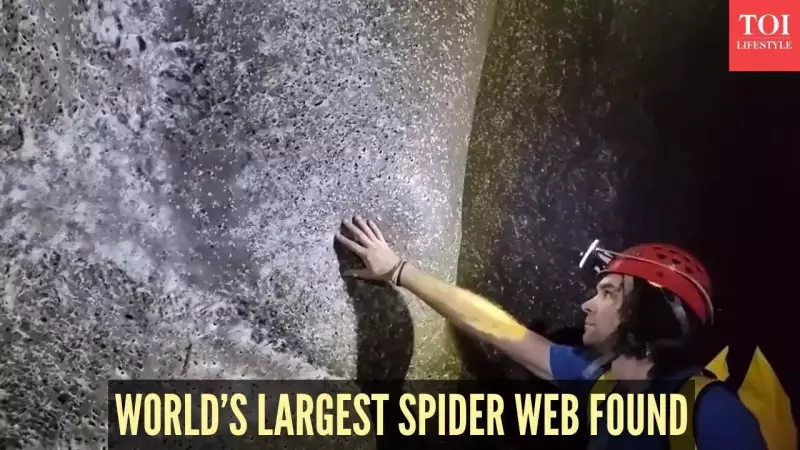
If you thought the giant spider Aragog from Harry Potter was terrifying, prepare to be amazed by a real-life discovery that might make you shiver. Researchers have uncovered the world's largest spider web, home to approximately 110,000 spiders, located in a cave on the border between Albania and Greece.
The enormous web spans an impressive area of 1,140 square feet and was created entirely in the absence of sunlight. What makes this discovery even more remarkable is the challenging environment where these spiders thrive - the cave contains dangerously high levels of hydrogen-sulphur gas that would be lethal to most creatures.
The Groundbreaking Research
In research that has left the scientific community astonished, a team of dedicated researchers documented what they describe as "the first documented case of colonial web formation in these species." Their findings were officially published in the respected Subterranean Biology journal on October 17.

Lead researcher Istvan Urak shared his profound experience of discovering the massive, sparkling web with Live Science. "The natural world still holds countless surprises for us," Urak expressed. "If I were to attempt to put into words all the emotions that surged through me [when I saw the web], I would highlight admiration, respect, and gratitude. You have to experience it to truly know what it feels like."
The Cave's Extraordinary Inhabitants
The research team identified two dominant spider species living together in this unique, self-sustaining ecosystem that has fascinated scientists. The massive spider colony was primarily located in a permanently dark section of the cave, specifically described as "on the left bank of the sulfidic stream of Sulfur Cave."
According to population estimates from the study:
- Over 42,000 Prinerigone vagans spiders
- Approximately 69,000 Tegenaria domestica spiders
These remarkable creatures survive by feeding on non-biting midges that consume microbial biofilms from sulphur-oxidising bacteria within the cave. These biofilms are described as "slimy secretions that protect microorganisms against threats in their environment" according to Live Science.
The unique environment is created by a sulphur-rich stream that fills the cave with hydrogen sulphide, originating from the cave's natural springs. Molecular analysis revealed another fascinating detail - these spiders are genetically distinct from their relatives living outside the cave, indicating they have successfully adapted to their dark, sulphur-rich surroundings.
Interestingly, this isn't the first time this cave has been explored. The Czech Speleological Society initially discovered the cave in 2022, but the full extent of its spider population and their extraordinary web-building capabilities have only now been properly documented and studied.






