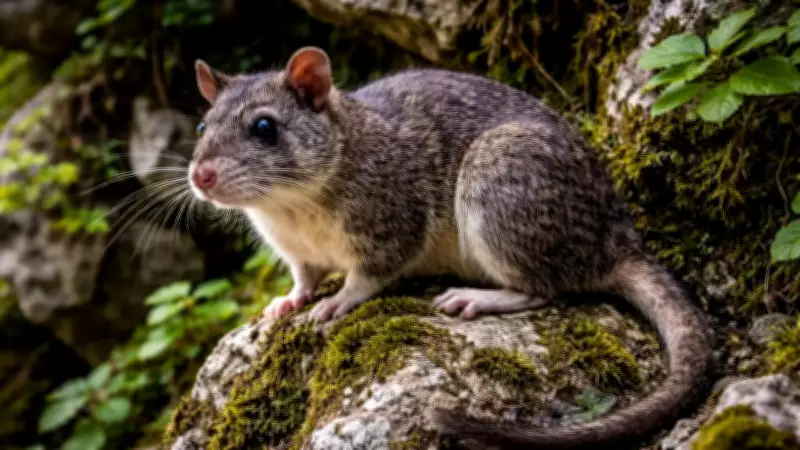
Laotian Rock Rat: A 'Living Fossil' Rediscovered After 11 Million Years
In a groundbreaking scientific revelation, a rodent discovered in Laos has been definitively identified as a member of a family previously believed to have vanished from the fossil record approximately 11 million years ago. Known as the Laotian rock rat, this creature represents a rare example of a Lazarus species, a term used to describe organisms that reappear after being presumed extinct for extensive geological periods.
Discovery and Initial Observations
The journey to this remarkable discovery began in the early 2000s when scientists, led by Mary R. Dawson and her colleagues, first encountered the Laotian rock rat in local markets of Southeast Asia. Although the species had long been familiar to indigenous communities, it remained scientifically unclassified until researchers noted its striking anatomical similarities to animals from the Diatomyidae group. This family of rodents was previously known only through fossilized remains dating back to the Miocene era, sparking intense interest in the newfound specimen.
Classification Within the Diatomyidae Family
Upon detailed examination, the Laotian rock rat exhibited distinctive skull and dental features that set it apart from all other known rodent families. Further morphological studies conclusively placed it within the Diatomyidae family, linking this living species to an ancestral lineage that had no contemporary representatives until now. This classification was a pivotal moment, as it bridged a gap in evolutionary history that spanned millions of years.

Scientific Confirmation Through Fossil Comparison
The identification was solidified through rigorous comparative analysis, as detailed in the journal Science article titled "Laonastes and the 'Lazarus Effect' in Recent Mammals." Researchers identified profound morphological parallels in skeletal and dental structures between the rock rat and Diatomyidae fossils, firmly establishing their evolutionary relationship. Additional taxonomic research, including studies published by Springer Nature on radiotelemetry and home range analysis, further confirmed the species as the sole living member of this long-extinct rodent family.
Habitat and Survival in Limestone Karst Regions
The Laotian rock rat primarily inhabits the limestone karst regions of Laos, characterized by rugged terrain, caves, and limited accessibility. This isolated and ecologically niche environment likely played a crucial role in the species' ability to evade detection and survive over millennia. The challenging landscape may have provided a refuge, shielding the rodent from predators and environmental changes that led to the extinction of its relatives.
Final Insights and Implications
This discovery underscores a profound connection between living species and extinct lineages, demonstrating that some organisms can persist in specialized ecological niches for millions of years despite gaps in the fossil record. It challenges conventional assumptions about extinction, suggesting that a lack of fossil evidence does not always equate to disappearance but may instead reflect limited observational opportunities. The Laotian rock rat serves as a testament to the resilience of life and the ongoing mysteries of evolutionary biology.