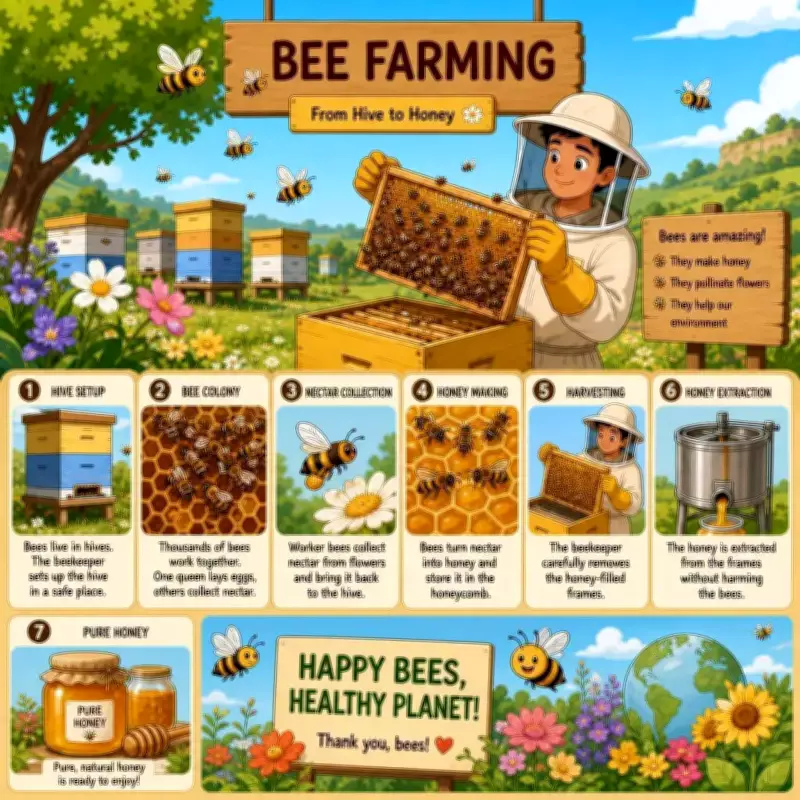
Madikeri: The Kushalnagar forest range officials have initiated a significant project aimed at improving the livelihoods of people residing in forest border villages. The forest department has prioritized the development of beekeeping by distributing honey boxes along with honey to forest residents in the Anekad, Athur, Dubare, and Meenukolli branch limits.
Alternative Income Source
This project was implemented with the objective of providing an alternative income source for families living in forest areas who are dependent on agriculture. It is believed that beekeeping can generate substantial income from a small area, and it also presents employment opportunities for women and youth.
Environmental Benefits
Beekeeping is not limited to economic benefits; it also plays a crucial role in environmental protection. Pollination by honeybees is likely to increase the productivity of forest and agricultural crops. Additionally, the presence of beehives may help control the movement of wild elephants. As Sachin Nimbalkar, sub-range forest officer of Meenukolli Branch, explains, elephants are likely to hesitate to enter certain areas due to the noise and activities of bee swarms, thereby reducing human-elephant conflict.

Multi-Faceted Approach
This project, undertaken by the forest department, is attracting attention by addressing three important aspects: the livelihood of forest border residents, environmental protection, and control of human-wildlife conflict. The initiative is expected to bring sustainable benefits to the community while fostering coexistence with wildlife.