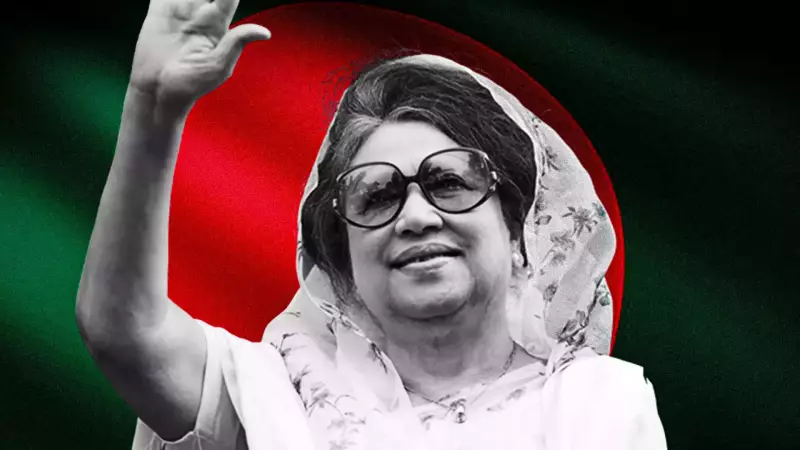
The political landscape of Bangladesh has lost one of its most defining figures. Khaleda Zia, the country's first elected woman prime minister, has passed away, marking the end of an era characterized by immense strength, deep controversy, and unparalleled influence. Her journey from personal tragedy to the pinnacle of national power, through three separate terms as premier, has left an indelible mark on South Asian history.
From Personal Tragedy to National Leadership
Born in what is present-day India, Khaleda Zia's ascent to power was forged in the crucible of personal loss. She entered the political fray following the assassination of her husband, President Ziaur Rahman. Rising to lead the Bangladesh Nationalist Party (BNP), she navigated the nation through periods of intense turmoil, including coups, mass uprisings, and protracted legal battles. Her political career was a testament to resilience, enduring imprisonment, prolonged illness, and a relentless series of courtroom wars. In a final twist, she was cleared of her last remaining corruption case merely months before her death on December 30, 2025.
A Rivalry That Defined a Nation
Perhaps the most enduring narrative of her political life was her fierce and historic rivalry with Sheikh Hasina of the Awami League. This was far more than a personal feud; it represented a fundamental contest for the soul and future direction of Bangladesh. Their alternating tenures in power created a binary political axis that dominated the nation's discourse for decades. This rivalry shaped policy, influenced international alliances, and often polarized the Bangladeshi electorate, creating a legacy of political confrontation that will outlive its central protagonists.

The End of an Era and a Lasting Legacy
Khaleda Zia's passing is a watershed moment for Bangladesh and the wider South Asian region, which is watching closely. Her three terms in office redefined the role of women in the subcontinent's politics, proving that women could not only lead but also command powerful political machines in a traditionally male-dominated arena. She led the BNP through its most challenging periods, cementing its place as a principal political force. While her career was mired in controversy, her influence was unmatched. Her death closes a chapter where politics was deeply personal, fiercely contested, and embodied by larger-than-life figures. The void left by her departure will undoubtedly reshape the dynamics within the BNP and the broader opposition, setting the stage for a new political phase in Bangladesh.
As the nation reflects, Khaleda Zia's story remains one of extraordinary political endurance. From becoming the first woman prime minister to engaging in a decades-long struggle with Sheikh Hasina, her life was inextricably linked with the modern history of Bangladesh. Her legacy, complex and contentious, will continue to be debated and will influence the country's political trajectory for generations to come.