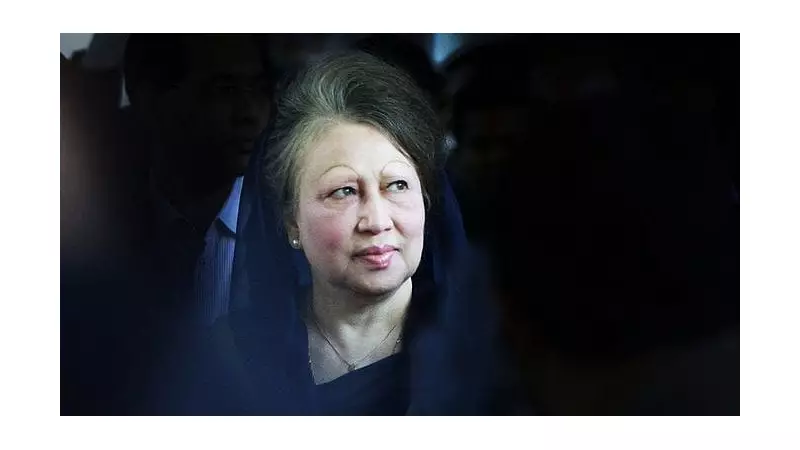
Bangladesh's political landscape has been irrevocably altered with the passing of Khaleda Zia, the nation's first woman to serve as Prime Minister. The former leader, who shaped the country's destiny for decades, died on Wednesday at the age of 80. Her death marks the end of an era defined by intense rivalry, democratic struggles, and personal resilience.
A Political Journey Forged in Tragedy
Khaleda Zia's entry into politics was not born of ambition but of profound personal tragedy. She was thrust into the public sphere following the assassination of her husband, President Ziaur Rahman, in 1981. Ziaur Rahman, a military ruler-turned-politician, had founded the Bangladesh Nationalist Party (BNP). After his death, Khaleda Zia reluctantly took the helm of the BNP, transforming from a shy, private figure into a formidable political force.
Her rise was meteoric. She led the BNP to a stunning electoral victory in 1991, becoming the first woman to lead the government in Bangladesh's history. This victory was a landmark moment for women in South Asian politics. She would go on to serve two more terms as Prime Minister, from 1991 to 1996 and again from 2001 to 2006. Her tenure was characterized by economic liberalization efforts and a staunchly nationalist foreign policy.
The Intense Rivalry with Sheikh Hasina
Khaleda Zia's political life was inextricably linked with her arch-rival, Sheikh Hasina, the current Prime Minister and leader of the Awami League. This rivalry, often dubbed a battle of "the two Begums," has been the central axis of Bangladeshi politics for over thirty years. Their conflict was deeply personal and ideological, rooted in the bloody history of Bangladesh's independence.
Sheikh Hasina is the daughter of Sheikh Mujibur Rahman, the founding father of Bangladesh, who was assassinated in 1975. Khaleda Zia's husband, Ziaur Rahman, was an army officer implicated in the coup that followed. This historical schism fueled a cycle of vendetta politics, where each leader, when in power, pursued legal actions against the other. Their alternating rule saw periods of significant economic growth but also deepening political polarization and violence.
Later Years: Legal Battles and Declining Health
After being ousted from power in 2006, Khaleda Zia's fortunes declined sharply. In 2018, she was convicted on corruption charges related to the embezzlement of foreign donation funds meant for an orphanage trust. She was sentenced to a lengthy prison term, a move her supporters decried as politically motivated.
Due to her deteriorating health, she was released from jail in 2020 under an executive order from the government on the condition that she receive medical care at home and not travel abroad. For the last four years, she remained under effective house arrest in Dhaka, receiving treatment for advanced liver cirrhosis, arthritis, diabetes, and heart and kidney ailments. Her final months were spent in and out of hospital, with her family long seeking permission for her to receive advanced medical treatment overseas—a request consistently denied by the government.
Legacy of a Polarizing Icon
Khaleda Zia leaves behind a complex and polarizing legacy. To her millions of supporters in the BNP, she was a symbol of resistance and democracy, a motherly figure who fought against authoritarianism. They credit her with empowering conservative and nationalist voices in Bangladeshi politics and championing economic development.
To her critics, her tenures were marked by rising corruption, political violence, and the nurturing of Islamist forces for political gain. The bitter feud with Sheikh Hasina's Awami League often paralyzed governance and pushed institutions to their limits.
Her death raises immediate questions about the future of the BNP, which has been significantly weakened by years of government crackdowns and the absence of its charismatic leader. It remains to be seen whether her passing will create a void that leads to the party's fragmentation or if it will galvanize her supporters in a new phase of political struggle.
For Bangladesh, the departure of one of its two most dominant political figures of the last half-century closes a volatile chapter. However, the deep-seated divisions she both represented and fueled are likely to continue shaping the nation's destiny for years to come. The government has announced a state funeral, and the nation now prepares to bid farewell to a leader who was, for better or worse, synonymous with modern Bangladesh.