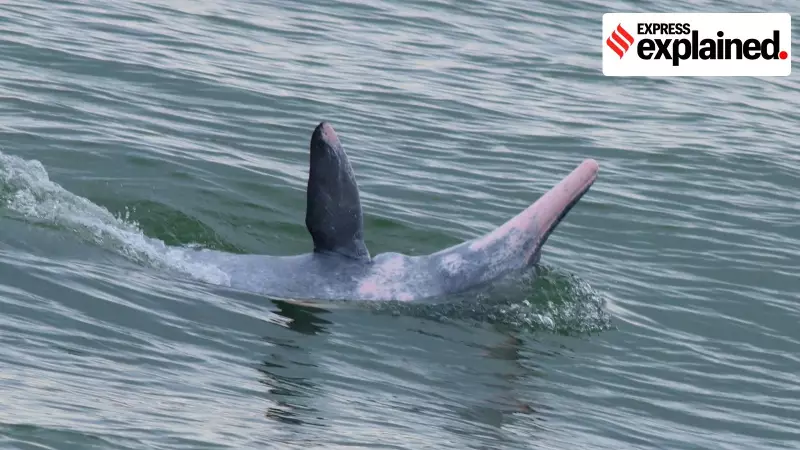
An extraordinary partnership between wild dolphins and traditional fishermen in Kerala's Ashtamudi Lake has captured international scientific attention, leading to a landmark research project that will continue until 2028. Scientists from multiple global institutions have launched an extensive study to understand this rare example of human-wildlife cooperation.
The Unique Fishing Partnership
In the coastal waters of Ashtamudi Lake, Kollam, a remarkable symbiotic relationship has developed between local fishermen and humpback dolphins. This dolphin-assisted cast net fishing was first documented in 2012 by Professor A Biju Kumar, R Smrithy and K Sathasivam from the University of Kerala's Department of Aquatic Biology and Fisheries.
The research published in the Indian Journal of Fisheries revealed that fishermen have learned to coordinate with dolphin feeding behaviors. Dolphins chase schools of mullet fish toward the shore using specific hunting techniques including sudden rushes toward prey, speedy zigzag movements, and stunning fish by tossing them into the air. Fishermen time their net casts to coincide with these dolphin movements, resulting in significantly improved catches for humans and successful foraging for dolphins.

International Research Collaboration
The new international project titled "The Ecology and Evolution of Cultural and Cooperative Behavior among Dolphins and Humans" brings together experts from the University of Kerala, Oregon State University (USA), Universidade Federal de Santa Catarina (Brazil), Australian National University, and the Dakshin Foundation, Bangalore. The study is supported by the National Geographic Society with Oregon State University serving as global coordinator.
Researchers are employing non-invasive methods including photo and video documentation, behavioral observations, and interviews with local fishers. The study explicitly ensures that no animals will be captured, handled, or disturbed during the research process.
Global Parallels and Conservation Significance
Similar dolphin-fishermen interactions have been documented in other parts of the world. In Laguna, Brazil, wild dolphins have formed strong symbiotic bonds with local fishermen since 1991, herding fish toward shorelines and providing distinct signals indicating when to cast nets. Myanmar reported similar mutualism in 1997.
The Indian Ocean humpback dolphin (Sousa plumbea) involved in Kerala's fishing cooperation is classified as endangered and protected under Schedule I of India's Wild Life (Protection) Act, 1972. These dolphins typically move in small herds in coastal waters and estuaries from East Africa to Southeast Asia, with mullet fish serving as their primary food source.
Kerala's coastal waters host eight dolphin species, though humpback dolphins are particularly noted for inhabiting shallow coastal areas. The abundance of mullet in Ashtamudi Lake, which opens directly to the Arabian Sea through an estuary, provides ideal conditions for this unique interspecies cooperation to flourish.