

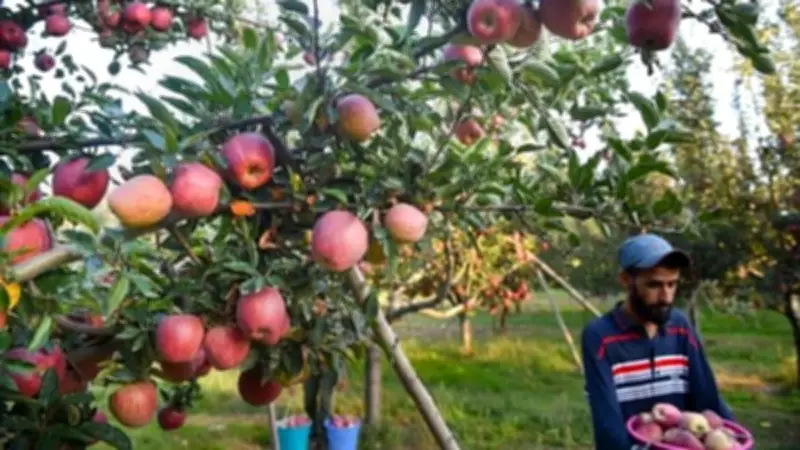
Kashmir's apple growers are facing a dual crisis of severe hailstorm damage and intense competition from cheaper imported apples, threatening the livelihoods of millions and the stability of the region's horticulture industry.
Hailstorm Devastation
Repeated hailstorms have battered apple orchards in Kashmir during the critical fruit-setting stage, causing up to 30% losses in the agriculture and horticulture sector. The unpredictable weather has left many farmers with damaged crops and reduced yields.
Import Competition Threat
Local growers are struggling to compete with cheaper imported apples from countries such as Iran, Turkey, the United States, and New Zealand. This influx has reduced market competitiveness for Kashmiri apples, leading to a 70% price crash in the industry.

Economic Impact on Growers
The damaged crops, combined with rising cultivation costs, are threatening the livelihoods of 3.5 million people who depend on Kashmir's apple industry. The region accounts for three-fourths of India's apple production, making the crisis a significant blow to the national fruit supply.
Demands for Support
Farmers and industry representatives are demanding crop insurance and financial assistance to mitigate losses from both weather extremes and import pressures. They argue that without government intervention, many will be forced out of the business.
Climate Vulnerability
The increasing frequency of hailstorms, untimely rainfall, and temperature fluctuations is making horticulture a riskier enterprise in Kashmir. Growers are calling for long-term strategies to adapt to climate change and protect their orchards.
The situation highlights the urgent need for policy support to safeguard Kashmir's apple industry, which is vital to the region's economy and food security.






