History often unfolds on seemingly ordinary dates, and June 5 stands out as a day that has repeatedly witnessed transformative events. Over nearly a century, this date has seen developments in politics, warfare, economics, civil rights, and surveillance that continue to shape the modern world. From Henry Ford's labor reforms to Edward Snowden's whistleblowing, the ripple effects of these moments are still felt today.
1937: Henry Ford Experiments with a Shorter Workweek
In 1937, industrialist Henry Ford made a groundbreaking decision to reduce the workweek for his employees from 40 to 32 hours, consisting of four eight-hour days with no reduction in pay. This move was revolutionary at a time when long working hours were the norm. Ford believed that happier, more rested workers would be more productive and have more time and money to spend, thereby boosting the economy. His experiment foreshadowed modern debates about work-life balance and the four-day workweek, proving remarkably ahead of its time.
1944: Eisenhower Makes the D-Day Decision
On June 5, 1944, General Dwight D. Eisenhower faced one of the most consequential decisions in military history: whether to launch Operation Overlord, the Allied invasion of Nazi-occupied France. Despite poor weather conditions, a favorable forecast led Eisenhower to give the go-ahead. The D-Day landings began on June 6, ultimately leading to the liberation of Western Europe and the defeat of Nazi Germany. Historians regard this as a turning point in World War II, and the decision underscores how timing and leadership can alter the course of history.

1947: The Marshall Plan Offers Europe a Lifeline
On June 5, 1947, U.S. Secretary of State George Marshall delivered a speech at Harvard University outlining a massive aid program to rebuild war-torn Europe. The Marshall Plan provided billions of dollars to revive Western European economies, stabilize democratic governments, and counter Soviet influence. This initiative is widely credited with rebuilding Europe and shaping the Cold War geopolitical landscape. Without it, the post-war recovery might have been far slower and more precarious.
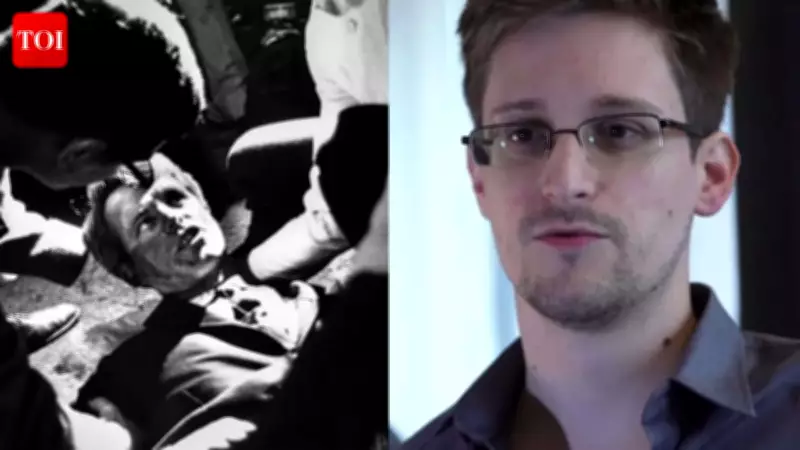
1968: Robert F. Kennedy Is Assassinated
The assassination of Senator Robert F. Kennedy occurred on June 5, 1968, shortly after he won the California Democratic presidential primary. Kennedy was shot at the Ambassador Hotel in Los Angeles by Sirhan Sirhan and died the next day. His death deepened the sense of turmoil in a decade already marked by civil unrest and the murder of Martin Luther King Jr. For many, Kennedy represented hope during a turbulent period, and his assassination sparked enduring debates and conspiracy theories that persist to this day.
1990: Nelson Mandela's Home Raided
Just months after his release from prison, Nelson Mandela faced a raid on his home by South African security forces on June 5, 1990. This incident highlighted the ongoing tensions during South Africa's transition from apartheid to democracy. Despite such challenges, Mandela's leadership and the subsequent negotiations paved the way for the country's first democratic elections in 1994.
1991: Mikhail Gorbachev Receives Nobel Peace Prize
On June 5, 1991, Soviet leader Mikhail Gorbachev received the Nobel Peace Prize for his role in reducing Cold War tensions through reforms such as glasnost (openness) and perestroika (restructuring). While these changes ultimately led to the dissolution of the Soviet Union, they also reduced the risk of nuclear confrontation and eased decades of East-West hostility.
2012: Charlie Kirk Launches Turning Point USA
On June 5, 2012, conservative activist Charlie Kirk, along with businessman Bill Montgomery, founded Turning Point USA, an organization focused on promoting conservative values on high school and college campuses. Over the past decade, the group has become a significant force in American politics, reflecting and shaping ideological battles over education, culture, and governance.

2013: Edward Snowden Blows the Whistle
On June 5, 2013, The Guardian published the first articles based on classified documents leaked by former NSA contractor Edward Snowden. The revelations exposed extensive government surveillance programs, sparking a global debate on privacy, security, and digital rights. Snowden was hailed as a hero by some and condemned as a traitor by others. More than a decade later, his disclosures continue to influence discussions about the balance between national security and individual freedoms.
These events demonstrate that June 5 is more than just another date on the calendar. It is a day when decisions and actions have repeatedly reshaped the world, leaving legacies that endure in politics, economics, civil rights, and technology.