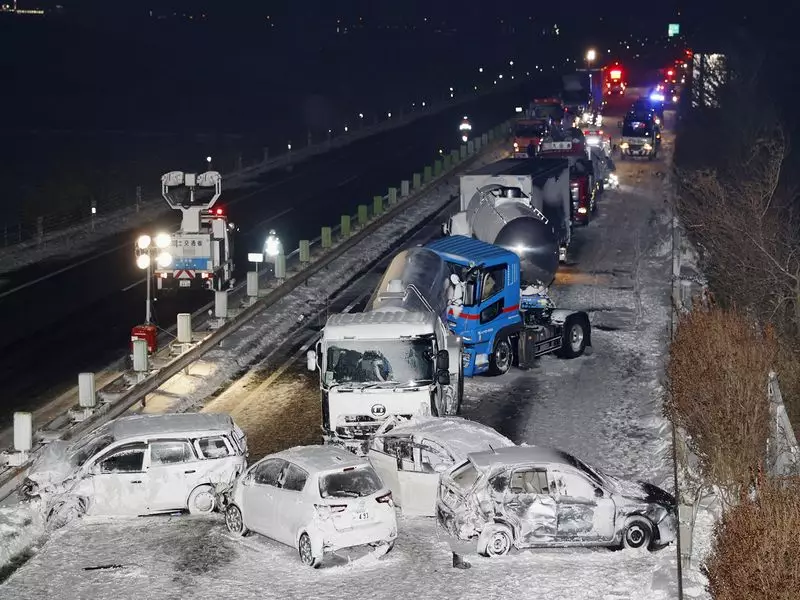
A horrific chain-reaction collision involving more than 50 vehicles on a major Japanese expressway has resulted in a tragic loss of life and numerous injuries. The massive pileup occurred during the early hours of Thursday, casting a spotlight on road safety during challenging weather conditions.
Chaos on the Tomei Expressway: Timeline of the Tragedy
The disaster unfolded on the Tomei Expressway in Shizuoka Prefecture, southwest of Tokyo. According to local authorities and fire department officials, the sequence of crashes began at approximately 5:45 AM local time on Thursday, May 30. The incident took place near the Makinohara Interchange, a critical juncture on this vital transport corridor.
Initial reports suggest that a dense fog blanket significantly reduced visibility on the road that morning. This poor visibility is considered a primary factor that led to the initial collision, which then triggered a catastrophic domino effect. Vehicle after vehicle, unable to stop in time, plowed into the growing wreckage, ultimately creating a scene of tangled metal stretching across the lanes.

Rescue Efforts and Grim Toll
Emergency services responded with urgency to the chaotic scene. Firefighters and rescue personnel worked for hours to extricate people trapped within the crushed vehicles. The human cost of the accident was severe.
Two individuals lost their lives in the collision. Furthermore, the pileup left at least 26 people injured. The injured were promptly transported to nearby hospitals for medical treatment. The scale of the incident required a massive response, with multiple ambulances and fire engines deployed to manage the crisis.
The aftermath brought the Tomei Expressway, a key artery connecting Tokyo to Nagoya and beyond, to a complete standstill. Traffic was halted in both directions, causing major disruptions for thousands of commuters and commercial transporters. Cleanup and investigation operations led to prolonged closures, with normal traffic flow resuming much later in the day.
Investigation and Road Safety Implications
Japanese police have launched a full-scale investigation to determine the exact cause of the initial crash and the factors that amplified its scale. While adverse weather is a central focus, investigators are also examining other potential elements, including:
- Vehicle speeds at the time of the incident.
- Driver awareness and reaction times.
- Road conditions and signage visibility.
This tragic event serves as a stark reminder of the dangers of driving in low-visibility conditions. It echoes similar multi-vehicle pileups that have occurred on highways worldwide, often linked to fog, snow, or sudden downpours. The accident is likely to reignite discussions in Japan about enhanced safety measures for expressways during inclement weather, such as improved warning systems, mandatory speed reductions, or even temporary pre-emptive closures during extreme fog.
The identities of the deceased have not been immediately released, pending notification of their families. The condition of the injured, some of whom were reported to be seriously hurt, remains a concern for authorities. This devastating 50-vehicle pileup on Japan's Tomei Expressway stands as one of the worst road accidents in the country in recent times, leaving a community in mourning and a nation reflecting on highway safety protocols.