

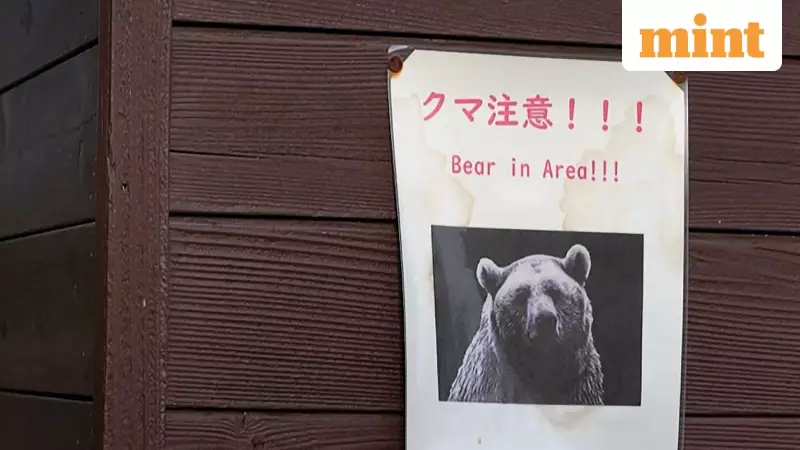
In an unprecedented move, Japan has deployed its military to tackle a dramatic surge in bear attacks that has left a record number of people dead and created an atmosphere of fear in mountainous communities. Since April, the country has witnessed 13 fatalities and over 100 injuries, a number that has already doubled the previous annual record with five months still remaining in the fiscal year.
A Nation on Edge: Daily Encounters and a 'Safari Park' Feeling
The northern prefecture of Akita has become a hotspot for these dangerous encounters, prompting the Defense Ministry to send in troops. For residents in these regions, bear sightings are no longer a rarity but an almost daily occurrence. The animals are being spotted in alarming proximity to human habitats, including near schools, train stations, supermarkets, and popular resorts.
This unsettling new reality was starkly summarized by Hajime Nakae, a professor of emergency and critical medicine at the Akita University Hospital. He told reporters that the frequent bear sightings made him feel like he was "living inside... a safari park for bears". The sentiment echoes across communities where the fear of attack is now a constant companion.

Social media has been flooded with evidence of the crisis, including viral videos showing a bear aggressively chasing a moving car in Hokkaido. The driver, in a state of panic, was forced to accelerate to escape the determined animal, highlighting the boldness of these creatures.
Operation Bear Trap: How Japan is Responding
In response to the crisis, Japanese troops began a targeted operation on Wednesday, November 5. Their mission is multifaceted: they are setting up box traps, providing logistical support to local hunters by assisting with transport, and helping to dispose of bears that are killed. A key directive in their operation, as reported by The Independent, is that they have been instructed not to open fire on the animals, focusing instead on capture and relocation efforts.
This military intervention underscores the severity of the situation, which the government is scrambling to control. The public is also taking measures into their own hands, with stores reporting a surge in sales of bear spray and protective bells, items now prominently displayed for worried citizens.
The Root of the Problem: Overcrowded Mountains and Hungry Bears
Experts point to a confluence of two major factors driving this alarming trend: a booming bear population and environmental changes. According to a recent government report, Japan's brown bear population has nearly doubled in just three decades to around 12,000. Similarly, the population of Asiatic black bears on the main island of Honshu has climbed to roughly 42,000.
Naoki Ohnishi, a researcher at the Forestry and Forest Products Research Institute, stated that some mountain regions are now "overcrowded" with bears. "Put simply, the size of the bear population has gone beyond the capacity of the mountains to hold them," he explained to AFP.
Compounding this population pressure is a poor harvest of acorns, a key food source for bears, which scientists attribute to changing climate patterns. This scarcity of natural food is forcing the hungry animals to venture into human settlements in search of sustenance, leading to the dramatic increase in dangerous encounters.
For those living on the front lines, like 28-year-old traditional hunter Kakeru Matsuhashi, the crisis is deeply personal. "We hear news almost every day about people being attacked or injured," he said. "It's becoming something that feels personal, and it's simply frightening." As Japan grapples with this unique challenge, the collaboration between its military, hunters, and communities highlights a desperate struggle to restore safety and balance.






