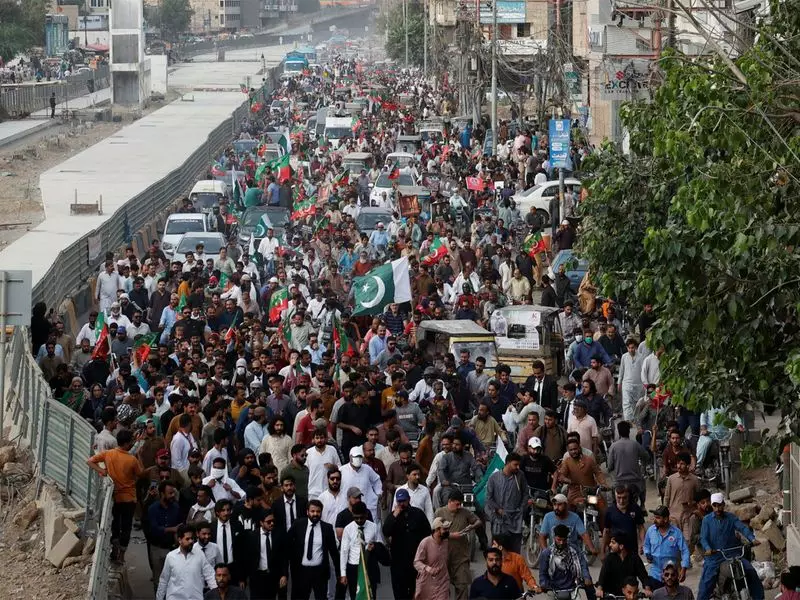
Islamabad, the capital of Pakistan, witnessed a significant eruption of public anger as hundreds of landowners and farmers took to the streets. The protestors are accusing the Capital Development Authority (CDA) of systematically stripping them of their legal land rights through coercive and allegedly illegal measures.
Landowners Decry CDA's "Illegal" Actions
The core of the dispute revolves around land located in sectors C-13, C-14, and C-15 of Islamabad. The protestors, who claim to be the legal owners of this land, allege that the CDA is attempting to acquire their property without following due legal process or providing fair compensation. They assert that the authority is using strong-arm tactics, including the deployment of police force, to intimidate them into surrendering their holdings.
The protest was organized by the affected landowners and supported by local political and social figures. A large crowd gathered at the National Press Club, holding placards and chanting slogans against the CDA's high-handedness. The demonstrators demanded immediate government intervention to halt what they termed an "illegal land grab" by the capital's development authority.
Legal Battles and Allegations of Coercion
The landowners presented a compelling case based on legal documentation. They claim to possess official land ownership records, known as 'girdawri,' and other revenue documents that prove their legitimate claim over the disputed plots. Their central allegation is that the CDA is bypassing the Land Acquisition Act of 1894, which mandates a proper procedure for acquiring private land for public purpose, including the issuance of formal notices and the determination of market-value compensation.
Instead, protestors accuse the CDA of resorting to pressure tactics. They reported instances where police were deployed to their lands, creating an atmosphere of fear and coercion. The landowners argue that this approach is not only unlawful but also a blatant violation of their fundamental property rights guaranteed under the constitution of Pakistan.
Political Support and Official Response
The protest garnered attention from political quarters. Leaders from various parties, including the Pakistan Tehreek-e-Insaf (PTI) and the Pakistan Muslim League-Nawaz (PML-N), expressed solidarity with the aggrieved landowners. They criticized the CDA's actions and called for a transparent and lawful resolution to the conflict.
In response to the growing outcry, the CDA issued statements defending its position. The authority maintains that the land in question is required for the development of the capital city and that it is acting within its legal mandate. However, it has not publicly addressed the specific allegations of bypassing the Land Acquisition Act or using intimidation tactics. The situation remains tense, with landowners vowing to continue their protest and pursue all legal avenues to protect their property.
The Islamabad land rights protest highlights a recurring conflict between urban development ambitions and the rights of private citizens. It raises critical questions about governance, the rule of law, and the methods employed by state authorities in pursuing development projects. The outcome of this dispute will set a significant precedent for future land acquisitions in Pakistan.