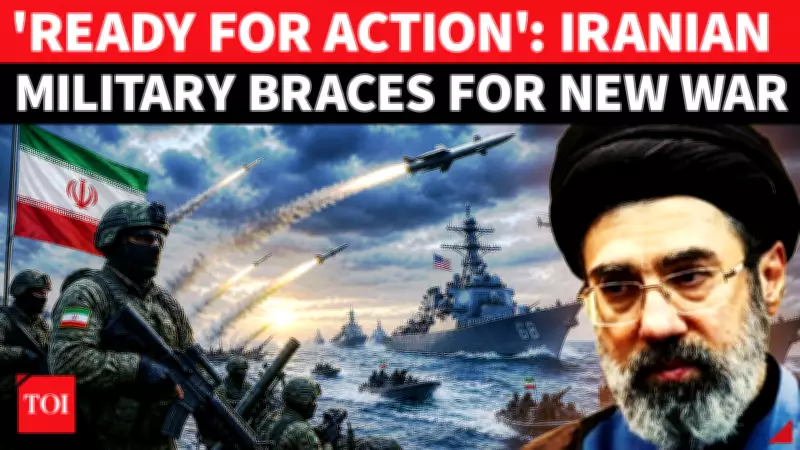
In a dramatic escalation of tensions in the Middle East, Iran has announced that it is fully prepared for any scenario in the strategic Strait of Hormuz, with military officials claiming they have already opened fire on United States military vessels. The revelation comes as part of a broader warning from Tehran that no American forces will be permitted to transit the vital waterway without prior authorization. Commercial shipping has also been urged to coordinate with Iranian authorities or risk facing dangerous consequences.
Iran's Military Posture in the Strait of Hormuz
A senior commander in Iran's Islamic Revolutionary Guard Corps (IRGC) has issued a stark threat, stating that any foreign military presence near the Strait will be met with a decisive response. The commander emphasized that Iran's military capabilities are fully operational and that the country is ready to defend its territorial waters. The Strait of Hormuz, a narrow passage connecting the Persian Gulf to the Gulf of Oman, is a critical chokepoint for global energy supplies, handling approximately 20% of the world's oil shipments. Any disruption to traffic through this route could have severe repercussions for international energy markets.
Claims of Firing on US Vessels
Iranian officials have asserted that their forces have already engaged US military vessels in the region, though details of the incident remain unclear. The claim has heightened concerns that a direct military confrontation between Iran and the United States may be imminent. The US Navy has yet to officially comment on the Iranian allegations, but the situation has prompted increased vigilance among naval assets in the area.

Warnings to Commercial Shipping
In addition to targeting military vessels, Iran has issued a warning to commercial ships operating in the Strait of Hormuz. The Iranian government has urged all commercial vessels to seek coordination with Iranian authorities before transiting the waterway. Failure to do so, officials warn, could result in dangerous consequences. This move is seen as an attempt to exert control over the Strait and pressure the international community.
Global Economic Implications
The escalating crisis in the Strait of Hormuz has sent shockwaves through global energy markets. Oil prices have already begun to rise as traders factor in the risk of a major conflict disrupting supply routes. Analysts warn that a prolonged closure or even a significant reduction in traffic through the Strait could lead to a sharp spike in oil prices, potentially triggering a global economic downturn. The United States and its allies are closely monitoring the situation, with diplomatic efforts underway to de-escalate tensions.
International Response and Rising Fears
The international community has reacted with alarm to Iran's latest threats. The United Nations has called for restraint on all sides, urging dialogue to prevent a full-scale conflict. Meanwhile, neighboring Gulf states are bracing for the possibility of spillover effects, including disruptions to their own shipping and energy exports. The United States has reiterated its commitment to ensuring freedom of navigation in international waters, with military options reportedly being considered.
As the situation continues to develop, the world watches with bated breath. The Strait of Hormuz remains a flashpoint in the broader Iran-US rivalry, and the current crisis represents one of the most serious confrontations in recent years. With both sides showing no signs of backing down, the risk of a catastrophic conflict looms large over the region and the global economy.