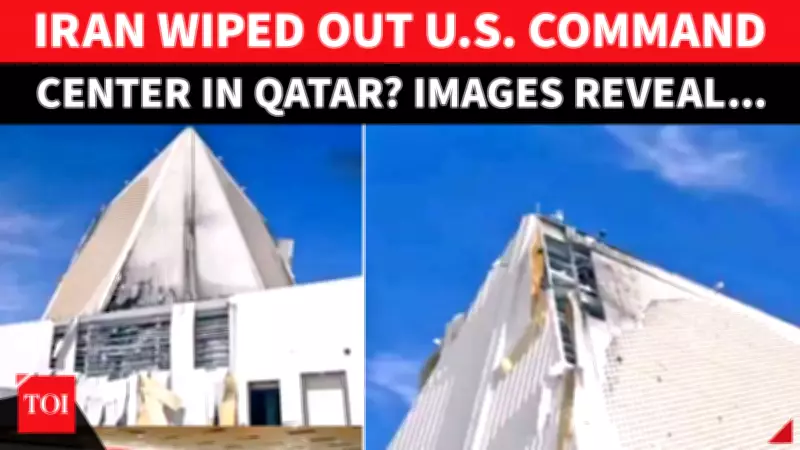
Fresh questions are emerging over the condition of a key U.S. military facility in Qatar following reports about the impact of Iranian missile strikes during the recent conflict. Reports cited by RT News claim the command centre, which has played a major role in coordinating U.S. air operations across the Middle East for decades, suffered severe damage and was left 'inoperable'. Footage aired by Al Jazeera has shown visible damage to infrastructure at the site, though competing claims remain regarding the full extent of the impact and the facility's current operational status. The developments come as Washington issues updated security warnings across the Middle East, underscoring continued concerns about regional instability and the possibility of renewed tensions.
Background of the Attack
The Iranian missile strikes targeted the Al Udeid Air Base, a sprawling facility that houses the U.S. Central Command's forward headquarters. According to military analysts, the base serves as a critical hub for coordinating airstrikes and drone operations across the region. The attack reportedly involved multiple ballistic missiles, some of which penetrated the base's air defenses. Initial assessments indicate that the command and control center was rendered non-functional, disrupting ongoing missions.
Visual Evidence and Conflicting Reports
Al Jazeera's footage shows craters near command buildings, shattered windows, and debris scattered across the compound. However, U.S. officials have downplayed the damage, stating that backup systems ensured continuity of operations. Independent verification remains difficult due to restricted access to the site. The Pentagon has not officially commented on the extent of the damage, but sources suggest that repairs are underway.

Regional Implications
The attack has heightened tensions across the Gulf region. The U.S. State Department has issued travel advisories for 14 Middle Eastern nations, warning of potential retaliatory strikes. Iran's state media hailed the operation as a successful demonstration of its military capabilities, while Gulf states have called for restraint. Analysts warn that the incident could escalate into a broader conflict, especially if Iran perceives further provocations.
Historical Context
The Al Udeid base has been a cornerstone of U.S. military strategy since the 1990s, hosting thousands of troops and advanced aircraft. It played a pivotal role in operations against ISIS and in monitoring Iran's nuclear program. The recent strike marks the first time the base has been directly targeted by a state actor, raising questions about its vulnerability to future attacks.
As the situation develops, international observers are closely monitoring the response from both Washington and Tehran. The United Nations has called for de-escalation, while regional powers like Saudi Arabia and the United Arab Emirates have expressed solidarity with the U.S. The coming days will be critical in determining whether this incident leads to a broader military confrontation or a diplomatic resolution.