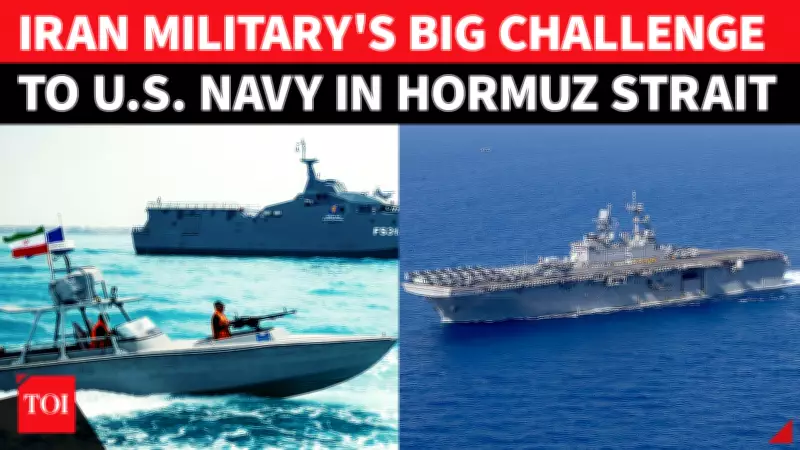
The rhetoric in the Persian Gulf has escalated from threats to a direct invitation for combat. Ali Akbar Ahmadian, a senior Iranian advisor and former naval officer, has issued a bold challenge to the U.S. military, urging them to 'come closer' and asserting that Iran is fully prepared for the asymmetric warfare it has been training for since the year 2000.
Background of Rising Tensions
This direct challenge follows Washington's decision to authorize immediate strikes on any Islamic Revolutionary Guard Corps (IRGC) asset deemed a threat to 'Project Freedom.' The situation has rapidly deteriorated, with U.S. helicopters already sinking seven Iranian boats and President Trump issuing a stark warning of 'total destruction.'
Strait of Hormuz: A Live Fire Zone
The Strait of Hormuz, a critical waterway for global oil shipments, has now become a live fire zone where any miscalculation could prove catastrophic. The Iranian military's challenge comes after a storm of IRGC drones swarmed the area, further heightening the risk of direct confrontation.

Analysts warn that the region is on the brink of a major conflict, with both sides demonstrating aggressive postures. The U.S. has reinforced its naval presence, while Iran has deployed fast attack boats and advanced missile systems along the coast. The international community is closely monitoring the situation, urging restraint from both parties.
In response to the Iranian challenge, Pentagon officials have stated that the U.S. Navy remains ready to defend its interests and allies in the region. However, they have not yet confirmed whether they will accept the invitation to enter the Strait of Hormuz under current conditions.