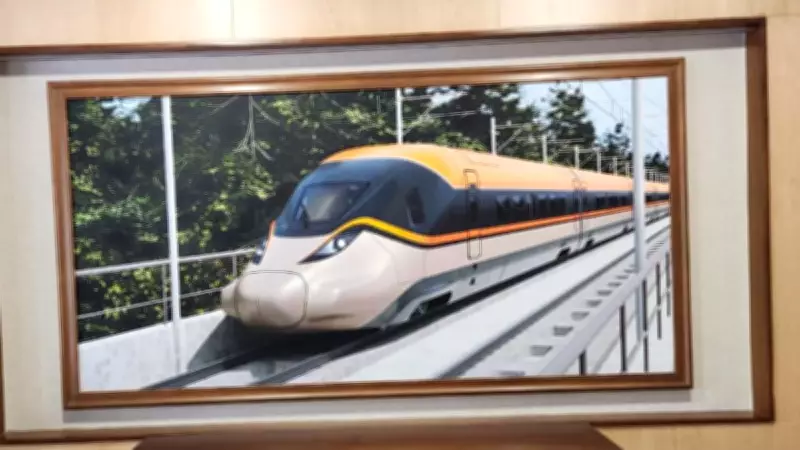
Indian Railways has unveiled the first official look of the proposed bullet train for the Mumbai-Ahmedabad high-speed rail corridor. The reveal marks a significant milestone in India's ambitious infrastructure project, which aims to drastically reduce travel time between the two major cities.
Project Overview and Expected Completion
The Mumbai-Ahmedabad bullet train project, which is being developed with technical and financial assistance from Japan, is expected to be operational by 2026. Once completed, the train will cover the 508-kilometer distance in approximately 2 hours and 7 minutes, compared to the current 6-7 hours by conventional trains. The project involves the construction of a dedicated high-speed rail line, with trains capable of reaching speeds of up to 320 km/h.
First Look and Design Features
The first look showcases a sleek, aerodynamic train design, featuring a distinctive blue and white color scheme. The train will have 10 coaches, including one executive class coach, and will be equipped with modern amenities such as reclining seats, onboard entertainment, and Wi-Fi connectivity. The design emphasizes passenger comfort and safety, with advanced braking systems and earthquake-resistant technology.

The bullet train will operate on a dedicated elevated track, with 12 stations along the route, including Mumbai, Thane, Virar, Boisar, Vapi, Surat, Bharuch, Vadodara, Anand, Ahmedabad, and Sabarmati. The project also includes the construction of a 21-km-long tunnel between Mumbai and Thane, which will be the first undersea tunnel in India.
Economic and Social Impact
The bullet train project is expected to boost economic growth in the region by improving connectivity, creating jobs, and promoting tourism. It will also reduce road and air traffic congestion, contributing to lower carbon emissions. The project is a key component of India's vision to modernize its railway infrastructure and enhance the overall travel experience for passengers.
Challenges and Progress
Despite delays due to land acquisition issues and the COVID-19 pandemic, the project has gained momentum in recent months. The National High Speed Rail Corporation Limited (NHSRCL) has acquired over 90% of the land required for the project. Construction work is underway on several sections, including the tunnel and bridges. The first look release is intended to generate public interest and confidence in the project's timely completion.
Indian Railways has also announced plans to procure trainsets from Japan, with the first set expected to arrive by 2024 for testing. The project is estimated to cost around Rs 1.1 lakh crore, with Japan providing a soft loan covering 81% of the cost at an interest rate of 0.1%.