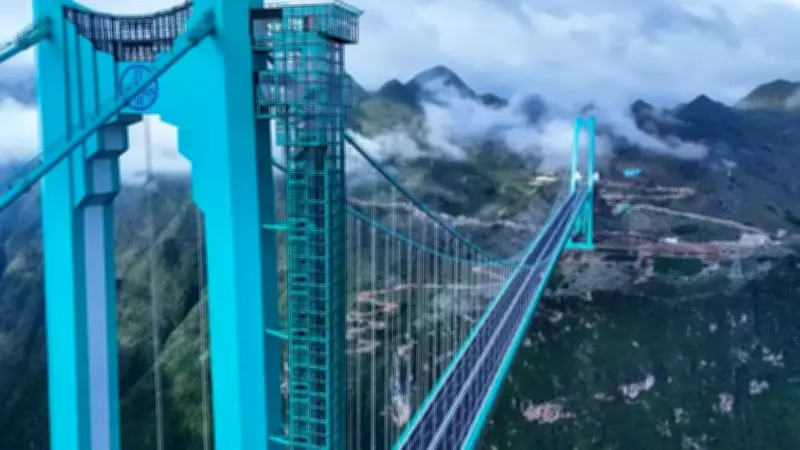
Huajiang Grand Canyon Bridge: A Marvel of Modern Engineering
Since its grand opening in September 2025, the Huajiang Grand Canyon Bridge has captivated international attention, soaring high above the Beipan River. With an impressive height of approximately 2,050 feet, this architectural wonder now holds the prestigious title of the tallest bridge in the world, surpassing previous records and setting a new benchmark in global infrastructure.
Transforming Travel and Connectivity
The bridge's impact extends far beyond its staggering height. Before its construction, navigating the treacherous canyon terrain required a grueling journey of nearly two hours along winding, indirect roads. The Huajiang Grand Canyon Bridge has revolutionized this experience, slashing travel time to a mere two minutes. This dramatic reduction has fundamentally altered movement patterns and usage in the region, enhancing connectivity across previously inaccessible areas.
Stretching roughly 4,658 feet in length, as reported by TIME Magazine, the bridge stands as one of the longest structures in a mountainous setting. Its construction, completed over three years, showcases advanced engineering techniques designed to overcome challenging geography. The bridge's primary purpose was to improve regional links, and it has succeeded by enabling vehicles to cross the canyon directly, thereby boosting economic and social integration.

Global Recognition and Accolades
Within just a few months of its debut, the Huajiang Grand Canyon Bridge earned a coveted spot on TIME Magazine's list of the 100 greatest places of 2026. This recognition places it alongside renowned global destinations, highlighting not only its engineering prowess but also its growing public appeal. Large-scale infrastructure projects like this are increasingly viewed as destinations in their own right, with their scale, innovative design, and breathtaking setting contributing to their visibility and allure.
The bridge's inclusion in such a prestigious list reflects a broader trend where monumental constructions gain international acclaim for their blend of functionality and aesthetic grandeur. It underscores how modern engineering achievements can capture the imagination of people worldwide, turning practical structures into symbols of human ingenuity.
Boosting Tourism and Adventure Activities
Beyond its transportation role, the Huajiang Grand Canyon Bridge has emerged as a significant tourism hotspot. It features multiple viewpoints strategically placed to offer clear, panoramic vistas of the canyon below. One of the most thrilling attractions is a glass walkway that allows visitors to look directly down into the valley, providing an adrenaline-pumping experience.
Additional amenities enhance the visitor experience, including a high-speed elevator that connects tourists to various observation points and a café perched high above the river, offering refreshments with a view. For adventure enthusiasts, sections of the bridge are utilized for activities such as bungee jumping, adding an element of excitement to the scenic backdrop.
Setting New Records and Comparisons
The Huajiang Grand Canyon Bridge has taken the height record from the Beipanjiang Bridge, which previously held the title as the world's tallest bridge and crosses the same river at a different location. This achievement is part of China's ongoing commitment to developing large-scale infrastructure in geographically challenging regions, aimed at reducing travel barriers and strengthening regional networks.
Globally, the bridge's height dwarfs that of other notable structures. For instance, the Royal Gorge Bridge in the United States, which opened in 1929 and stands at about 956 feet above the Arkansas River, held the world's highest bridge record for decades. The significant difference in height between these two bridges illustrates the remarkable advances in engineering and construction methods over the years, including the use of new materials and improved techniques that enable more complex and ambitious designs.

Future Implications and Expert Insights
Experts suggest that this pattern of constructing record-breaking bridges may continue, with similar projects planned in various parts of the world. The Huajiang Grand Canyon Bridge serves as a testament to how modern infrastructure can transform landscapes, improve livelihoods, and inspire awe. As countries invest in overcoming natural obstacles, such structures are likely to play a pivotal role in shaping future travel and tourism trends.
In summary, the Huajiang Grand Canyon Bridge is not just a feat of engineering but a symbol of progress, connecting communities while drawing global admiration. Its recognition by TIME Magazine cements its status as a must-see destination, blending practicality with spectacle in the heart of China's rugged terrain.