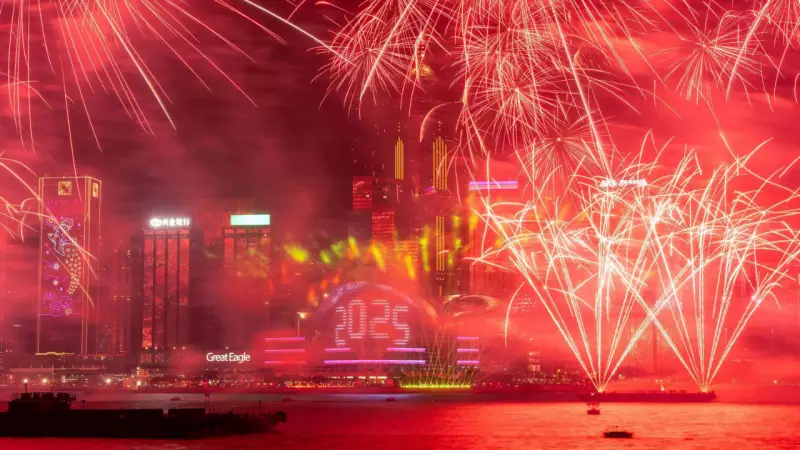
Hong Kong's world-famous New Year's Eve fireworks display over Victoria Harbour has been cancelled for 2026, marking a sombre shift in celebrations following a devastating fire that claimed over 160 lives. The city will instead welcome the new year with a music concert and a landmark light show.
A Celebration Transformed by Tragedy
The decision to scrap the traditional pyrotechnic spectacle comes directly in the wake of a massive fire in late November. The blaze broke out at the Wang Fuk Court apartment complex in Tai Po, a northern suburban district. This was the financial hub's worst fire since 1948, resulting in the tragic loss of at least 161 lives.
Authorities investigating the incident identified substandard safety netting and foam boards on windows as key factors that allowed the fire to spread with terrifying speed. The residential block was undergoing renovation at the time, shrouded in bamboo scaffolding and green nets. Thousands of residents who lost their homes and loved ones have been forced to relocate to temporary housing, hotels, and hostels.

New Year's Eve Plans: Music and Lights Replace Fireworks
In place of the explosive sky show, Hong Kong's tourism board has organised an alternative celebration for Wednesday night. The event will feature a performance by the soft rock duo Air Supply, along with other singers, in Central district. This area is not only a key business centre but also home to the famous Lan Kwai Fong nightlife hub.
As midnight approaches, the facades of eight iconic city landmarks will transform into giant countdown clocks. They will present a three-minute synchronized light show to ring in the new year. This visual spectacle is designed to offer a moment of reflection and collective hope without the traditional fireworks.
Impact on Tourism and a History of Cancellations
The cancellation is expected to have a tangible economic impact. Rosanna Law, Hong Kong's Secretary for Culture, Sports and Tourism, acknowledged on Tuesday that the absence of the fireworks display would affect some hotel and restaurant businesses. The fireworks have long been a major tourist draw, typically attracting hundreds of thousands of spectators to the Victoria Harbour promenade for New Year, Lunar New Year, and National Day.
This is not the first time Hong Kong has altered its festive plans due to tragedy. Similar cancellations occurred for the 2013 National Day festivities after a 2012 vessel collision killed 39 people, and for the 2018 Lunar New Year celebration following a fatal bus crash. Fireworks were also scrapped during the 2019 protests and the COVID-19 pandemic.
The history of fireworks itself is deeply rooted in Chinese tradition. According to historical records and the American Pyrotechnics Association, their origin dates back to the second century B.C. in China. The first documented firecracker is credited to Li Tian, a monk from the Tang Dynasty (618-907 C.E.), who discovered that enclosing gunpowder in bamboo stems created loud explosions used to ward off evil spirits.
As 2026 begins, Hong Kong will observe this ancient tradition not with bangs in the sky, but with a collective remembrance of the lives lost and a quieter hope for renewal.