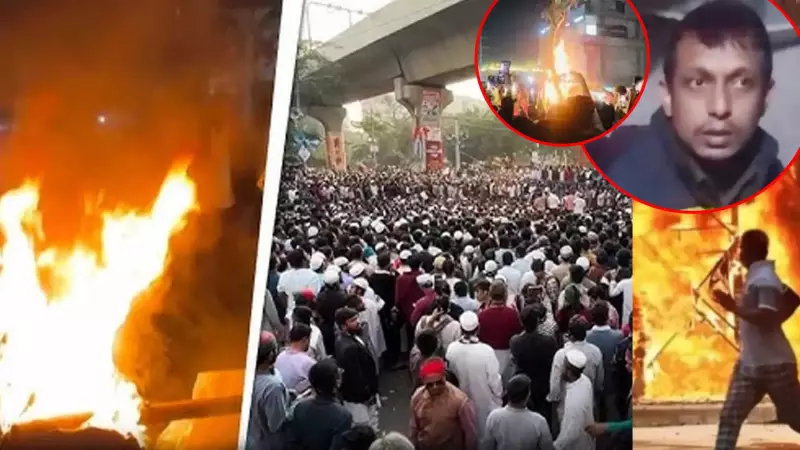
A Hindu trader in Bangladesh is battling for survival after a horrifying attack that saw him hacked and set on fire on a roadside. The incident, which occurred in the Damudya area, has sent shockwaves through the community and added to growing concerns over the safety of religious minorities in the country.
Details of the Brutal Assault
The victim, identified as Khokon Chandra Das, who owns a medicine shop, was targeted while returning home from work. According to his wife's harrowing account, the assailants not only hacked him but also poured gasoline over his head and face before igniting it. In a desperate bid to save his own life, Das managed to jump into a nearby pond. His escape was aided by local residents who raised an alarm upon witnessing the atrocity.
Authorities have confirmed that two suspects have been identified in connection with the case, and investigations are actively ongoing. The attack, which took place recently, underscores a terrifying pattern of violence.

A Pattern of Targeted Violence
This is not an isolated incident. The assault on Khokon Chandra Das follows a series of recent lynchings and killings targeting Hindu men in different parts of Bangladesh, including districts like Mymensingh and Rajbari. These repeated acts of violence have created an atmosphere of fear and insecurity among the minority community.
The situation has been further inflamed by ongoing unrest and anti-India protests in Bangladesh, within which attacks on minorities have become a disturbing feature. The brutality of these incidents has triggered significant outrage and concern in neighbouring India, where the government and public have been closely monitoring the safety of Hindu communities abroad.
Accountability and Ongoing Investigations
Facing domestic and international pressure, authorities in Bangladesh have pledged to ensure accountability. Officials have promised thorough investigations into this and other similar attacks, vowing to bring the perpetrators to justice. The promise of action is being closely watched by human rights groups and the affected communities who demand concrete steps beyond assurances.
The survival of Khokon Chandra Das, though critical, stands as a grim testament to the escalating dangers faced by minorities. His case has become a focal point in the urgent discourse on protection, communal harmony, and the rule of law in Bangladesh.