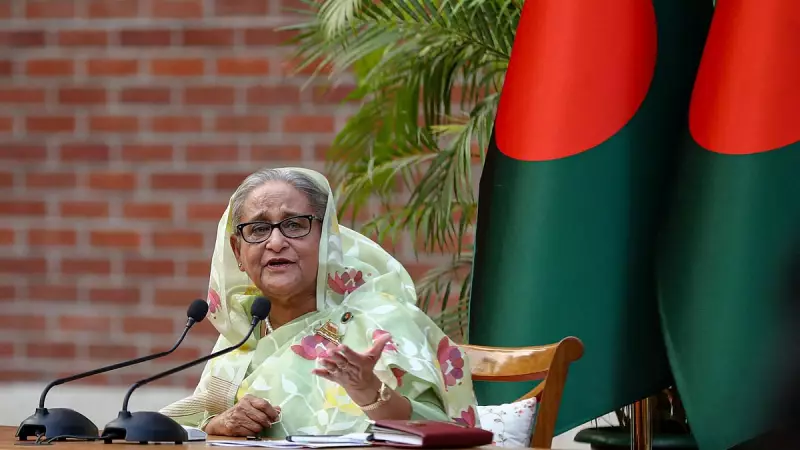
In a significant political intervention, former Bangladeshi Prime Minister Sheikh Hasina has launched a sharp critique against the current head of state, Muhammad Yunus, alleging a dangerous power vacuum and the spread of extremist ideology.
Hasina's Stark Warning from Indian Exile
Speaking from India, where she has been residing since her government's fall, Sheikh Hasina presented a grave assessment of Bangladesh's political landscape. She asserted that true democracy cannot exist in the country under its present leadership. The core of her argument hinges on the fact that the nation is being governed by a head of state who lacks an electoral mandate, a situation she deems fundamentally undemocratic.
A Nation at an Ideological Crossroads
Hasina's most alarming claim is that Muhammad Yunus is not in control of the country's direction. She warned that this leadership void has created an environment where Islamist groups with alleged links to terrorist organizations are actively spreading a hardline ideology. This, according to the former Prime Minister, poses a severe threat to Bangladesh's social fabric and democratic future. Her statements, made on 07 November 2025, frame the current administration as illegitimate and incapable of countering rising extremism.
Implications for Democracy and Regional Stability
The accusations from a figure of Hasina's stature carry considerable weight. By highlighting the connection between an unelected government and the rise of radical elements, she places international attention on Bangladesh's internal stability. Her residence in India also subtly underscores the regional implications of the political situation in Dhaka. The ongoing political turmoil, as outlined by Hasina, suggests a challenging path ahead for Bangladeshi democracy and its relations with neighboring countries.