

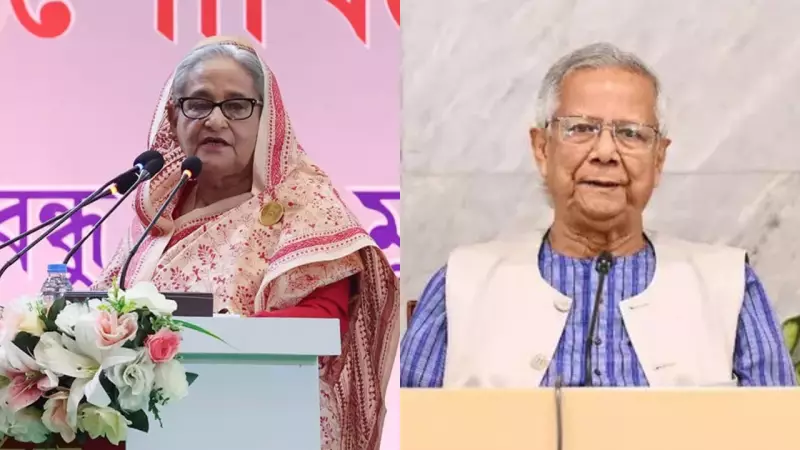
In a sharp escalation of political rhetoric, Bangladesh's former Prime Minister Sheikh Hasina has launched a scathing attack on the country's current interim administration. The Awami League leader, who was removed from power in August last year, accused the government led by Muhammad Yunus of committing grave atrocities against religious minorities.
Hasina's Christmas Message Alleges Targeted Violence
Issuing a statement on the occasion of Christmas, the 78-year-old political veteran claimed the ruling group had seized power illegally. She alleged a disturbing pattern of violence, specifically pointing to the targeting of non-Muslim communities since her ouster. Hasina directly referenced the recent lynching of a 25-year-old Hindu worker in Mymensingh city, describing such acts as "horrific precedents."
"In particular, it is perpetrating unspeakable atrocities against non-Muslims," Hasina stated. She expressed a firm belief that the people of Bangladesh would reject this "dark time." The former leader also accused the Yunus government of interfering with the religious freedoms of all communities, asserting that the situation has deteriorated significantly since August 2024.

Political Turmoil and a Key Player's Return
The allegations come amidst renewed political uncertainty, marked by a significant development. Bangladesh Nationalist Party (BNP) acting chairman Tarique Rahman landed in Dhaka on Thursday, ending a self-imposed exile of over 17 years in the United Kingdom.
Rahman, the 60-year-old son of ailing former Prime Minister Khaleda Zia, arrived with his wife and daughter. His return is seen as a major move ahead of the general elections scheduled for February. BNP Standing Committee members received him at the airport.
Rahman's homecoming follows the killing of prominent youth leader Sharif Osman Hadi, who was instrumental in the movement that toppled Sheikh Hasina's government. The political landscape was reshaped after the Awami League government was overthrown during the student-led July Uprising on August 5, 2024.
Shifting Alliances and Future Contests
The interim government subsequently disbanded the Awami League under the Anti-Terrorism Act. This action has left Jamaat-e-Islami and its Islamist allies, who were once partners of the BNP between 2001 and 2006, as the main rivals to the current administration.
Rahman's return gains added significance as Jamaat-e-Islami seeks to expand its influence in Bangladesh's fractured political scene. The BNP had announced his planned return on December 12, after Rahman hinted at it in a November 29 Facebook post expressing a desire to be near his critically ill mother.
Meanwhile, minority groups in Dhaka held protests on Monday, criticizing the interim government's failure to prevent persecution. As Sheikh Hasina extended Christmas greetings hoping for harmony, the stage is set for a intense political battle, with the protection of minority rights and the legitimacy of the current government at its core.






