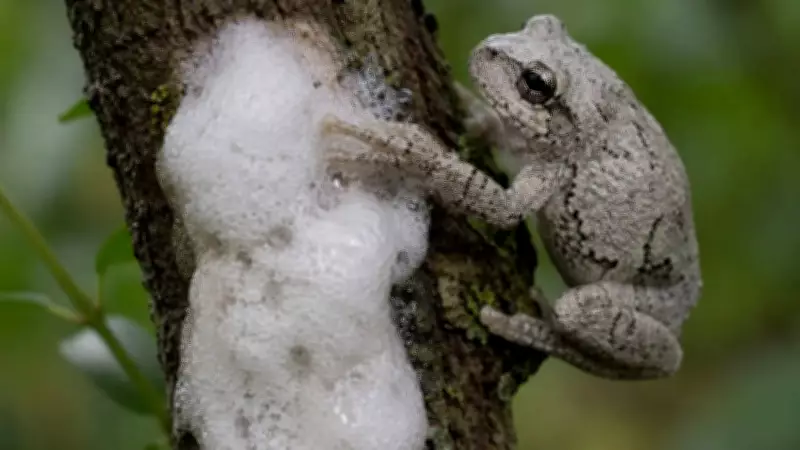
On some summer mornings in southern Africa, strange white bundles can be spotted hanging from branches above ponds and marshes. These out-of-place structures look like pieces of cloud that have drifted down and become tangled in the trees overnight. They are not built by birds, insects, or spiders, but are nurseries constructed by a frog.
Hidden Among Woodlands and Wetlands
Hidden among woodlands, savannas, and seasonal wetlands lives the grey foam-nest tree frog, a species that remains largely unnoticed for much of the year. During the wetter months, however, it reveals one of the most unusual breeding rituals in the amphibian world. Instead of depositing eggs directly into water, these frogs suspend them above it inside masses of protective foam, creating floating white nests scattered through the canopy.
How the Nests Are Built
The nests begin as a sticky secretion produced by the female. Perched on branches that overhang still water, she works the material into a thick froth using her hind legs. This process is far from hurried, and hours can pass before the structure takes shape. Inside this foam chamber, hundreds of eggs are deposited and fertilized. The nest remains attached to the branch while the embryos develop within its damp interior. From below, the finished structure can resemble a lump of pale shaving foam balanced improbably among the leaves. According to the iNaturalist species profile for the grey foam-nest tree frog, females may even return after initial construction to add another layer of foam, helping to keep the developing eggs from drying out.

Survival Advantages of Foam Nests
This arrangement may seem unusual, but it serves a practical purpose. Water levels can fluctuate, temperatures can change rapidly, and aquatic predators are a constant threat. By raising their offspring above the surface, the frogs create a temporary refuge during the earliest and most vulnerable stage of development. The nursery is only a temporary home. After several days, tiny tadpoles emerge from the foam and drop into the water beneath, where they feed, grow, and eventually transform into young frogs. A single nest can contain hundreds of eggs, meaning one hanging cluster may represent an entire generation waiting to enter the pond below.
Unique Breeding Strategy
The species has another unusual characteristic. Breeding gatherings are often crowded, with females mating with multiple males while producing a single clutch. According to iNaturalist, it is common for females to mate with numerous partners during one reproductive event. Scientists believe this behavior may improve the chances of successful fertilization and increase survival among offspring. The result is a breeding system that differs markedly from the simpler pairings often associated with frogs. For observers, the most visible outcome remains those pale nests hanging above the water's edge, quietly sheltering the next generation.
Adaptations for Survival
Despite their dependence on water for breeding, grey foam-nest tree frogs are well adapted to places where moisture can be scarce. They spend long periods away from permanent water sources and possess skin that limits water loss. During dry spells, they shelter beneath bark and vegetation, waiting for more favorable conditions. Their appearance changes too. Individuals can shift from light shades to darker browns depending on temperature, helping them manage heat while conserving precious moisture. This is a useful adaptation for a species living in landscapes where conditions can swing between heavy seasonal rains and prolonged dry periods.
For most of the year, these frogs remain easy to miss. Yet when the rains arrive, the evidence of their presence appears overhead. Suspended among branches, the foam nests resemble scraps of cloud caught in the trees, a fleeting sight that has become one of the defining features of this remarkable southern African amphibian.