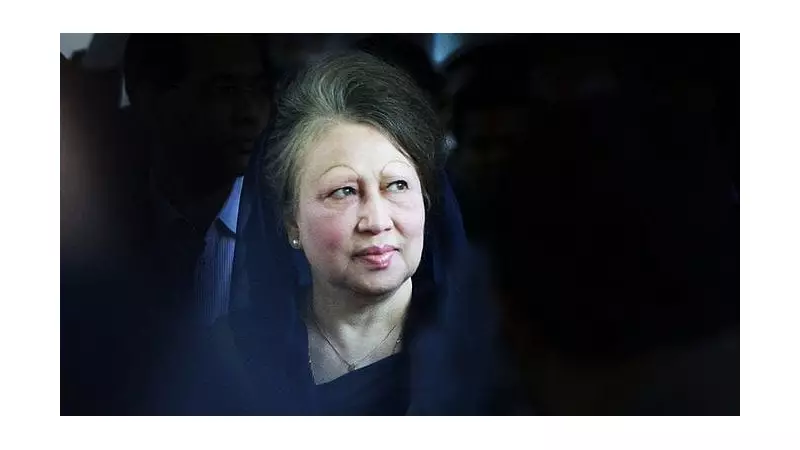
The health condition of former Bangladesh Prime Minister and opposition leader Khaleda Zia has taken a serious turn for the worse, raising alarm among her family, political allies, and the nation. The 78-year-old chairperson of the Bangladesh Nationalist Party (BNP) is reportedly battling critical complications, including liver cirrhosis and arthritis, at a private hospital in the capital, Dhaka.
A Deteriorating Medical Situation
According to reports from her personal physician, Professor AZM Zahid Hossain, Khaleda Zia's condition has become unstable. She is suffering from significant bleeding, which is a major concern given her existing health issues. The medical team attending to her at Evercare Hospital has indicated that her situation is now critical and requires highly specialized intervention.
Khaleda Zia has been receiving treatment for liver cirrhosis and advanced arthritis for an extended period. These chronic conditions have severely impacted her overall health, making her vulnerable to further complications. The recent development of internal bleeding has added a new layer of urgency to her medical care, pushing her condition into a precarious state.
The Political Context and Legal Hurdles
Khaleda Zia's health crisis is unfolding within a complex political and legal framework. The former two-time Prime Minister was convicted in a corruption case and subsequently released from jail in 2020 on an executive order, subject to specific conditions. A key condition of her release was that she would receive medical treatment within Bangladesh and not travel abroad.
This restriction has now become a central point of contention. Her family and the BNP leadership argue that the medical facilities required for her advanced liver and internal complications are not available within the country. They are urgently appealing to the Bangladeshi government, led by Prime Minister Sheikh Hasina, to grant special permission for Khaleda Zia to travel overseas for life-saving treatment.
The appeal highlights a tense political dynamic. Khaleda Zia, as the chief of the main opposition BNP, has been a long-standing political rival of the current ruling party, the Awami League. The decision on whether to allow her to leave the country is, therefore, laden with significant political implications.
Appeals for Compassion and Urgent Action
Facing this medical emergency, Khaleda Zia's younger brother, Shamim Iskander, has made a heartfelt public appeal. He has formally requested the government to lift the travel ban temporarily on humanitarian grounds, allowing his sister to access advanced medical care in countries like Germany, the United Kingdom, or the United States.
The BNP has also mobilized, calling for nationwide prayers for the speedy recovery of their ailing leader. Party officials and supporters emphasize that the request is purely based on medical necessity and human compassion, urging the authorities to separate health issues from political considerations.
As of now, the Bangladeshi government has not issued an official response to the latest appeals. The nation watches closely, awaiting a decision that could have profound consequences for the country's political landscape and, more immediately, for the life of one of its most prominent former leaders.
The situation remains fluid, with Khaleda Zia's medical team working to stabilize her condition in Dhaka while the political appeal for her transfer abroad gains momentum. The coming days are likely to be crucial in determining the course of her treatment and recovery.