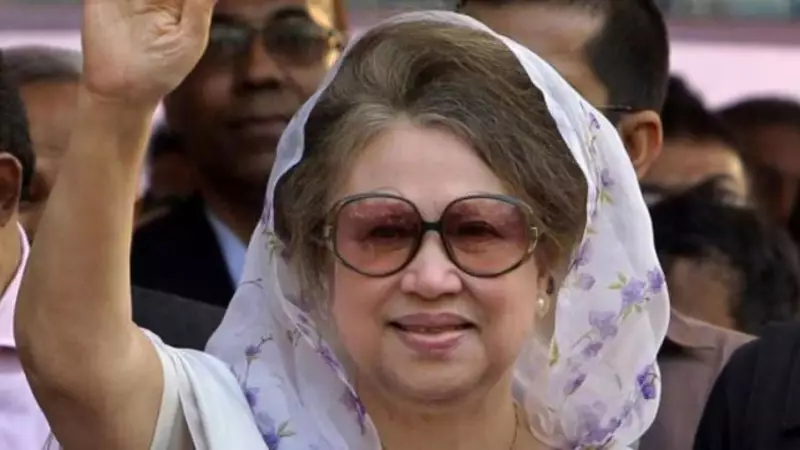
In a significant development for Bangladesh's political landscape, former Prime Minister Khaleda Zia has passed away at the age of 80. Her party, the Bangladesh Nationalist Party (BNP), confirmed the news on Tuesday, December 30, 2025.
A Political Era Ends
Khaleda Zia, a three-time prime minister and the first woman to lead the government of Bangladesh, was a central figure in the nation's politics for over three decades. Her long-standing rivalry with current Prime Minister Sheikh Hasina defined a generation of political discourse in the country.
Her death follows a prolonged period of illness and legal battles. Notably, her passing comes just a day after her nomination for the upcoming February 12, 2025 national elections was filed from the Feni-1 constituency. In a significant turn earlier in the year, the Supreme Court of Bangladesh acquitted her in the last remaining corruption case against her in January 2025, clearing the path for her electoral participation.
Legacy and Political Journey
Khaleda Zia's political tenure was marked by substantial reforms and intense rivalry. She served as prime minister for three terms: from 1991 to 1996, briefly in 1996, and from 2001 to 2006.
Her first government is credited with restoring the parliamentary system in Bangladesh. Key social initiatives launched under her leadership included the expansion of access to education, notably introducing free primary schooling and free education for girls up to Class 10.
Her later years were fraught with challenges, including imprisonment, ongoing health issues, and protracted legal fights, often seen as part of the fierce confrontations between her BNP and the ruling Awami League.
Context and Implications
Zia's death occurs at a critical juncture for Bangladesh, with national elections scheduled for February 12. The political atmosphere in recent months has been tense, with debates centering on governance, democracy, and minority rights.
Adding another layer to the situation is the recent return of her son, Tarique Rahman, the acting chairman of the BNP. He came back to Bangladesh last week after 17 years in exile, an event that party members say had energized their cadre ahead of the polls.
Regionally, India's Ministry of External Affairs recently expressed concern over hostilities against minorities in Bangladesh, a comment that was firmly rejected by Dhaka. These developments underscore the complex socio-political environment surrounding this major event.
The demise of Khaleda Zia marks the end of a formidable chapter in South Asian politics. Her legacy, intertwined with Bangladesh's democratic evolution and deep-seated political divisions, will undoubtedly continue to influence the nation's trajectory, especially in the imminent electoral contest.