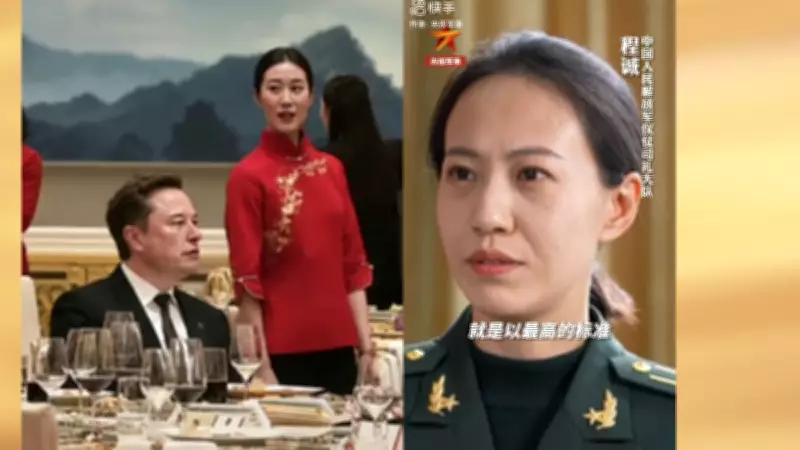
A startling revelation has emerged from a recent report, claiming that a high-ranking Chinese army general disguised herself as a waitress to spy on Elon Musk and the United States delegation during President Donald Trump's state visit to Beijing in 2019. The incident, which took place at a banquet hosted by Chinese President Xi Jinping, has raised serious concerns about espionage tactics employed by foreign intelligence services.
Details of the Espionage Operation
According to sources familiar with the matter, the general, whose identity remains classified, underwent extensive training to pose as a waitress. She was reportedly tasked with eavesdropping on conversations between Musk, the CEO of Tesla and SpaceX, and other US officials. The delegation included high-profile figures such as then-Secretary of State Mike Pompeo and National Security Advisor John Bolton.
The disguised general was able to move freely among the guests, refilling drinks and clearing plates while listening for any sensitive information. The operation was part of a broader Chinese intelligence effort to gather insights on US technology and trade policies.

Musk's Reaction and Security Concerns
Elon Musk, known for his outspoken nature, was reportedly unaware of the surveillance at the time. However, after the report surfaced, his security team expressed grave concerns about the breach. Musk has been a target of foreign intelligence due to his involvement in cutting-edge technologies, including electric vehicles, space exploration, and artificial intelligence.
The US Secret Service, which was responsible for the delegation's security during the visit, has launched an internal review to determine how such a breach occurred. Critics argue that this incident highlights vulnerabilities in diplomatic security protocols.
Broader Implications for US-China Relations
The spying incident adds another layer of tension to the already strained US-China relations. It comes amid ongoing disputes over trade, technology, and human rights. The Biden administration has yet to comment officially, but analysts expect a strong diplomatic response.
China has denied the allegations, calling them 'baseless and fabricated.' A spokesperson for the Chinese Foreign Ministry stated that such claims are 'irresponsible and damage mutual trust.'
This incident also underscores the growing concerns about Chinese espionage activities targeting American business leaders and government officials. In recent years, several US companies have reported attempts by Chinese agents to steal proprietary information.
Historical Context of Espionage in Diplomacy
Espionage during diplomatic events is not new, but the use of high-ranking military personnel for such operations is rare. The Cold War era saw numerous instances of spies posing as waitstaff, but modern security measures have made such tactics less common. This case suggests that China may be employing more sophisticated and brazen methods to gather intelligence.
Security experts recommend that US delegations adopt stricter protocols, including background checks on all service staff and the use of encrypted communication devices.
The full extent of the information compromised remains unknown, but the incident serves as a stark reminder of the constant threat of espionage in international diplomacy.