

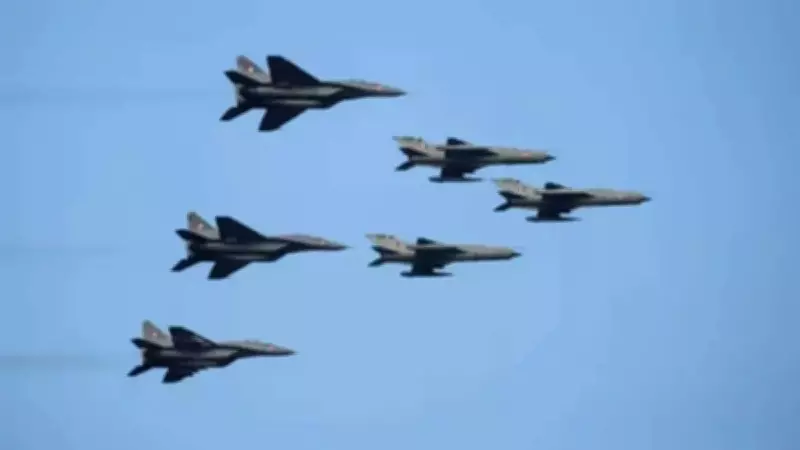
China's Mysterious 40-Day Airspace Closure Fuels Speculation of Military Drills
China has announced a mysterious 40-day closure of airspace near Beijing, a move that has raised significant eyebrows globally and sparked intense speculation about potential large-scale military drills in the offing. This unprecedented action, which restricts flight operations in a key region, comes amid heightened regional tensions and has prompted analysts to closely monitor developments for signs of impending military exercises.
Unprecedented Airspace Restrictions
The airspace closure, which is set to last for an extended period of 40 days, is centered around the capital city of Beijing. This decision has been implemented without detailed public explanation from Chinese authorities, leading to widespread curiosity and concern among international observers. The closure affects a substantial area, disrupting normal aviation activities and suggesting a significant operational requirement, possibly related to defense or security preparations.
Analysts and aviation experts have noted that such prolonged airspace restrictions are rare and typically indicate major events, such as military maneuvers or high-stakes testing of new defense technologies. The timing of this closure is particularly noteworthy, as it coincides with ongoing geopolitical frictions in the Asia-Pacific region, raising questions about China's strategic intentions and its potential impact on regional stability.

Global Reactions and Speculations
The international community has reacted with a mix of apprehension and scrutiny. Many countries, including neighboring nations and global powers, are closely watching the situation, concerned that this airspace closure could be a precursor to aggressive military drills. Some observers have pointed out that China has a history of conducting large-scale military exercises in sensitive periods, and this closure might be part of a broader pattern to assert its military capabilities and regional influence.
Key points of speculation include:
- Potential Military Drills: The closure could facilitate extensive military exercises, involving air force, missile systems, or naval operations, aimed at showcasing China's defense readiness.
- Testing of New Technologies: It might allow for the testing of advanced military technologies, such as stealth aircraft or drone systems, in a controlled environment away from public view.
- Regional Tensions: Given ongoing disputes in areas like the South China Sea and Taiwan Strait, this move could be interpreted as a show of force or a response to perceived threats.
Implications for Regional Security
This development has significant implications for regional security dynamics. If the airspace closure indeed leads to military drills, it could escalate tensions with neighboring countries and challenge the status quo in the Asia-Pacific. Security analysts warn that such actions might provoke counter-responses from other nations, potentially leading to a cycle of military posturing that undermines peace and stability in the region.
Moreover, the lack of transparency from Beijing regarding the reasons behind the closure adds to the uncertainty. Without clear communication, there is a risk of misinterpretation and miscalculation, which could inadvertently heighten conflicts. International bodies and diplomatic channels are likely to seek clarifications from China to ensure that this move does not violate any agreements or escalate into a broader crisis.
Looking Ahead
As the 40-day period progresses, the world will be watching for any signs of military activity or official statements from China. This event underscores the importance of open dialogue and confidence-building measures in international relations to prevent misunderstandings. For now, the mysterious airspace closure remains a focal point of global attention, with its true purpose and consequences yet to be fully revealed.






