

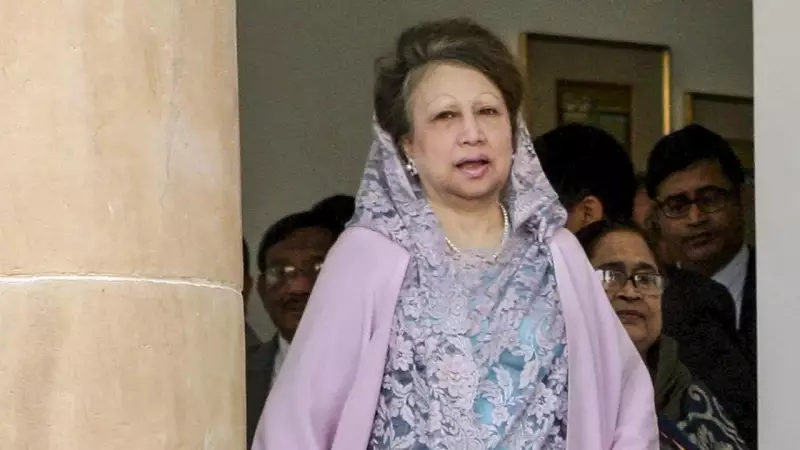
In a major political development, Tarique Rahman, the acting chairman of the Bangladesh Nationalist Party (BNP) and son of former Prime Minister Khaleda Zia, is set to end his prolonged self-exile. After spending over 17 years in the United Kingdom, Rahman is scheduled to return to his homeland on December 25.
Formal Return and Electoral Roadmap
The BNP, Bangladesh's largest political party, officially announced on Monday that Tarique Rahman will complete the necessary formalities to become a registered voter on December 27, just two days after his arrival from London. His return is timed just weeks before the crucial February 12 parliamentary polls, fueling widespread speculation that he will take the helm of the party's campaign.
This move is largely viewed as a strategic step to lead the BNP in the upcoming elections, especially in light of his mother's ailing health and his position as her political heir. The party's leadership vacuum has been a pressing issue, and Rahman's physical presence is expected to galvanize the BNP-led alliance.

Government Facilitation and Political Manoeuvring
The path for his return was discussed in detail during a meeting on Sunday involving chief adviser Muhammad Yunus. Earlier this month, foreign adviser Md Touhid Hossain had stated that the government could issue a 'one-time travel pass' within a single day to facilitate Rahman's return if he expressed the desire to come back.
Rahman's homecoming, however, is set against a tense political backdrop. The country has witnessed a spate of violent incidents following the announcement of the election schedule last month. The political arena is sharply divided, with the BNP-led alliance poised to challenge the coalition headed by Bangladesh's largest Islamist party, Jamaat-e-Islami.
A History of Pressure and Political Stance
Tarique Rahman has been a vocal critic of the interim government's extended tenure. Back in May, he emphasized the urgent need for elections and publicly questioned Muhammad Yunus's mandate to make long-term foreign policy decisions, arguing that an unelected government's duties should conclude once an elected administration is in place.
It is noteworthy that the BNP and its allies were instrumental in pressuring the interim government for early elections, a move that faced strong opposition from several other quarters. His return marks a pivotal moment that could significantly alter the dynamics of the impending electoral battle.






