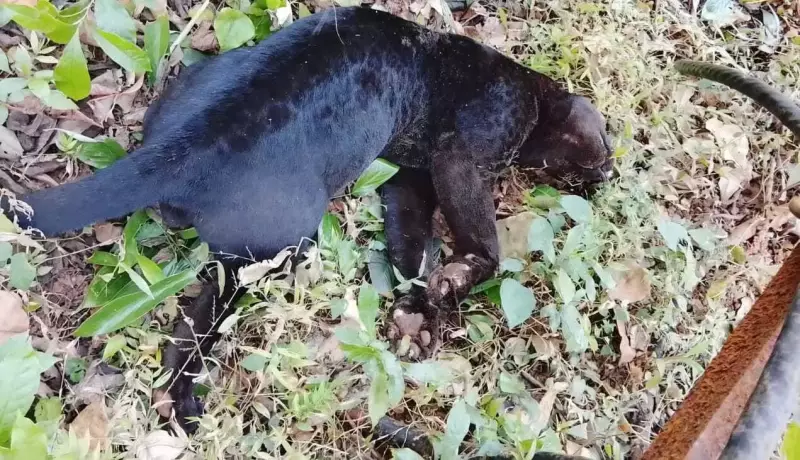
A tragic incident has claimed the life of a young black panther in the forests of Goa. The protected animal was electrocuted after coming into contact with the live wires of an electricity transformer.
Chase Ends in Tragedy
The fatal accident occurred in the Sonauli-Collem area of Dharbandora taluka. According to forest officials, the three-year-old panther was likely chasing its prey. In a misjudged leap from a tree, the wild cat landed directly on the live wires of the transformer.
Forest guards patrolling the area made the grim discovery on Monday. They found the carcass approximately 12 kilometers from Collem village. The location is deep within the dense Bhagwan Mahaveer Wildlife Sanctuary and Mollem National Park.

Official Investigation and Findings
Jiss Varkey, the Deputy Conservator of Forests (Wildlife) for North Goa, provided insight into the probable cause. "The wild cat likely misjudged its jump from a tree, leading to its fatal encounter with the live wires," Varkey stated. The carcass was located near a small shrine dedicated to a Hindu deity, adding a poignant note to the scene.
Given that the black panther is a Schedule I protected species under the Wildlife Protection Act, 1972, standard procedures were immediately followed. A postmortem examination was conducted by a team of veterinarians from the Usgao and Mollem animal dispensaries to determine the exact cause of death.
Aftermath and Conservation Concerns
Following the necessary examinations, the panther's remains were cremated as per protocol. The forest department has confirmed that a detailed autopsy report documenting the findings will be made available in the coming days.
This incident has highlighted the ongoing conflict between wildlife and human infrastructure, even within protected sanctuary areas. Electrocution remains a significant threat to wildlife across India, and this case underscores the need for continued vigilance and possibly safer infrastructure on the fringes of critical habitats.