

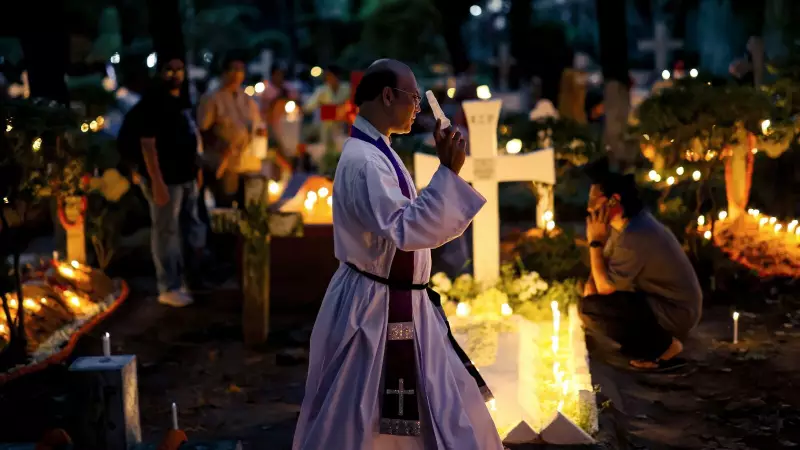
The Christian minority in Bangladesh is living in fear after a series of crude bomb attacks targeted two Catholic churches and a school in recent weeks, with police confirming the incidents were designed to spread terror.
Wave of Attacks Shakes Religious Community
According to police reports, three separate bomb attacks have occurred since October, targeting religious and educational institutions serving the Catholic community. No injuries have been reported in any of the incidents, but the pattern of attacks has created significant anxiety among Bangladesh's small Christian population.
The first attack occurred on October 8, when assailants threw a crude bomb at Dhaka's historic Holy Rosary Catholic Church, which was originally established by Portuguese missionaries in the 17th century.

The violence escalated on the night of November 7, when attackers simultaneously targeted two additional Catholic institutions - St Mary's Cathedral and St Joseph's School and College. Police described the attackers using motorcycles for quick getaways after throwing the explosive devices.
Police Confirm Terror Intent
Dhaka police spokesman Muhammad Talebur Rahman stated unequivocally that the attacks were "certainly aimed at terrifying people." Investigators are working to determine whether the incidents are connected or represent isolated attacks.
"We are trying to determine whether the incidents are connected or isolated - they are certainly aimed at terrifying people," Rahman told AFP. He detailed how attackers on a motorbike threw a crude bomb inside the St Joseph's School campus before fleeing the scene.
Community Response and Resilience
Despite the fear gripping the community, Bangladesh's Christians have shown remarkable resilience. Nirmal Rozario, president of the Bangladesh Christian Association, reported that approximately 500 worshippers still attended services at St Mary's Cathedral the day after the bomb exploded in front of the building.
A 25-year-old university graduate and regular churchgoer described the atmosphere as having an "eerie feeling" and admitted that "anxiety grips many of us while going to church." The individual requested anonymity due to security concerns.
At St Joseph's School and College, Principal Brother Chandan Benedict Gomes acknowledged the attack had caused "anxiety" among students and staff, but emphasized that "classes were held as usual" following the incident.
Political Context and Security Concerns
The attacks occur against a backdrop of political turmoil in Bangladesh, which has been unstable since an uprising toppled Sheikh Hasina's government over a year ago. With national elections scheduled for February 2026, the targeting of religious minorities adds to existing tensions.
Interim leader Muhammad Yunus, the 85-year-old Nobel Peace Prize winner serving as chief adviser, has repeatedly committed to holding elections as planned despite increasing violence. The political climate turned more volatile when major parties opened their campaigns on November 5, with a shooting occurring at a Bangladesh National Party rally almost immediately.
Security concerns have prompted Bangladesh police to offer cash rewards for the surrender of more than 1,300 machine guns, rifles and pistols that were looted during last year's uprising.
Bangladesh's Christian community represents a small minority of approximately 500,000 people in the predominantly Muslim nation of 170 million. The recent attacks have raised concerns about the safety of religious minorities during this period of political transition.






