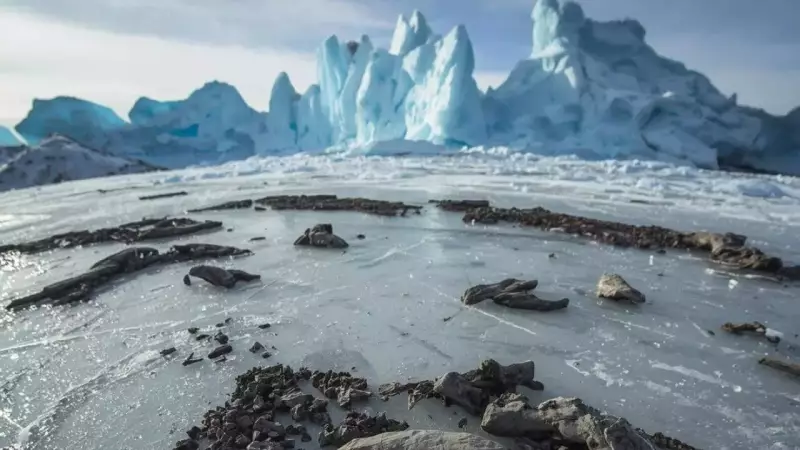
Baby Dinosaur Fossils Discovered in Arctic Ice Challenge Old Theories
Scientists have made a remarkable discovery that completely changes our understanding of ancient civilizations. They found baby dinosaur fossils buried deep within Arctic permafrost. This exciting find proves that dinosaurs actually nested in polar regions, something researchers previously doubted.
Tiny Teeth Tell a Big Story
Researchers discovered these incredible fossils in Alaska's Prince Creek Formation. This area sits on the harsh North Slope terrain. The fossils measure just two millimeters long. They consist of tiny teeth and bone fragments that belonged to baby dinosaurs.
These miniature remains come from at least seven different dinosaur species. The collection includes both plant-eating duck-billed hadrosaurs and meat-eating tyrannosaurs. What makes this discovery particularly significant is that these fossils represent embryos and newborn dinosaurs.

Polar Nesting Confirmed
A recent study published in Current Biology titled "Nesting at extreme polar latitudes by non-avian dinosaurs" documents these findings. The research reveals something astonishing. About seventy percent of dinosaur groups identified in the Prince Creek Formation appear as juvenile fossils.
This high percentage of baby dinosaur remains tells us something crucial. These dinosaurs didn't migrate to warmer areas during polar winters. Instead, they stayed put and bred right there in the Arctic region.
What the Fossils Reveal
Tiny Hatchlings: Scientists uncovered miniature dinosaur teeth and bone fragments measuring just one to two millimeters in Northern Alaska.
Multiple Species: The discovery includes at least seven different kinds of dinosaurs, ranging from plant-eaters to meat-eaters.
Local Nesting: These fossils represent embryos and newborns, proving these dinosaurs bred in the Arctic rather than migrating south.
Year-Round Residency: Approximately seventy percent of dinosaur families in this region appear as hatchlings, indicating permanent residence.
Surviving the Polar Climate
The late Cretaceous Arctic had an average temperature of about six degrees Celsius. This climate resembled modern-day Ottawa with its seasonal forests. The long, cold, dark winters forced dinosaurs to develop special adaptations.
These ancient creatures likely evolved features like feathers for warmth and insulation. Their ability to survive such conditions suggests they were far more resilient than scientists previously believed.
No Migration Needed
Newborn dinosaurs faced an impossible task if they tried to migrate from the Arctic. Professor Gregory Erickson, a co-author of the study, explains why. Dinosaur eggs in that region required five to six months to hatch.
This long incubation period meant hatchlings emerged just as winter's darkness settled in. Given their tiny size, the extended incubation, and the short Arctic summer, migration simply wasn't feasible. Surviving the chill proved much more practical than attempting a three-thousand-kilometer journey southward.
Rewriting Dinosaur History
These Arctic hatchlings are transforming how scientists view dinosaur life. The fossils suggest dinosaurs possessed remarkable resilience. They possibly even had warm-blooded characteristics that allowed them to survive conditions most creatures would find unbearable.
By demonstrating polar nesting, this research reveals that dinosaur biology and behavior were more complex than anyone imagined. Future expeditions will delve deeper into this frozen past. This discovery marks just the beginning of understanding how dinosaurs thrived during endless polar nights.