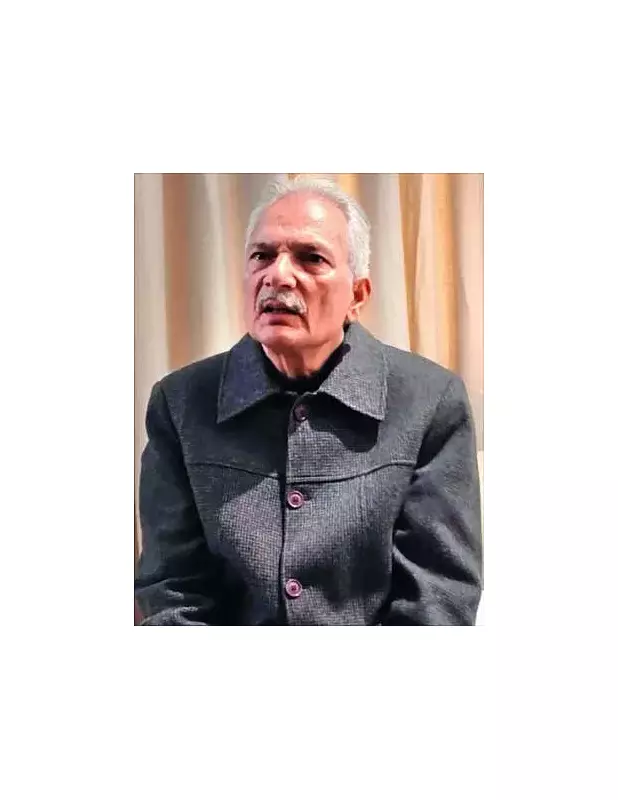
In an exclusive interview with The Times of India, former Prime Minister of Nepal and a key architect of the country's constitution, Baburam Bhattarai, provided a deep analysis of the recent political upheaval, the state of India-Nepal ties, and the broader geopolitical dynamics affecting the Himalayan nation.
The Genesis of the Gen-Z Protests: Internal Contradictions
Addressing the September Gen-Z protests that rocked Nepal, Bhattarai stated that the situation remains in flux. He attributed the unrest to Nepal's prolonged transitional phase, which began after the monarchy was abolished in 2008 and institutions remained weak until the constitution's promulgation in 2015.
"Nepali governments haven't been able to deliver," Bhattarai said, highlighting that while institutions started developing post-2015, they were not fully formed. This governance deficit, coupled with the skyrocketing aspirations of the youth amplified by digital technology, led to mounting frustrations that exploded in September.

He dismissed the notion that external elements were the primary drivers, calling the crisis a "manifestation of internal contradictions." The immediate trigger was the then-government's ban on social media. This act, combined with public antagonism towards the leadership of traditional parties like the Nepali Congress and the two Maoist factions, rampant corruption, and economic failure, sparked the initial revolt.
"On the second day... different vested interests, both internal and external, naturally tried to fish in troubled waters," he added, acknowledging that external forces sought to capitalize on the chaos.
Monarchy's Return? Zero Chance, Says Bhattarai
On calls from certain quarters for the restoration of the monarchy, the former PM was unequivocal. He reminded that the monarchy was overthrown by a popular mandate after it had "totally failed" and repeatedly staged coups against democracy since the 1960s.
"This bogey of monarchy is only raised by certain vested interests. There is zero chance of restoration of monarchy," Bhattarai asserted, putting to rest speculation about a royal comeback.
India-Nepal Relations: A Call for Modernization
Discussing bilateral ties with India, Bhattarai believes that Nepal's internal political issues will not significantly impact the multifaceted relationship. However, he strongly advocated for updating the foundational 1950 Treaty of Peace and Friendship.
"I was one of the major proponents of that idea. Because every treaty and agreement is time specific," he explained. His position is that the treaty needs to be revised with mutual agreement, reflecting contemporary realities.
When asked about the Agnipath scheme and its impact, Bhattarai pointed to the long history of recruiting Nepalese nationals into foreign armies, including India's and Britain's. "This also needs to be revisited," he stated, suggesting a comprehensive review of all elements of the bilateral relationship as a package.
To insulate the crucial ties from political changes in either country, he emphasized the need for continuity in state policy. "We shouldn't indulge in issues for partial gains of a particular political party or leader," Bhattarai cautioned, urging against actions that vitiate neighbourly relations.
On China and South Asian Cooperation
Regarding concerns about China's growing footprint in Nepal, Bhattarai termed them "highly exaggerated." He acknowledged the changing geopolitics with the rise of India and China as global powers, alongside US interests, but firmly stated, "I don't think Nepal can be a playground for any external forces. Nepal won't come between our neighbours and other powers."
On the stagnation of SAARC, he referenced the latest US national security strategy's acceptance of a multipolar world. "Naturally, this will also impact South Asia," he said, calling for greater regional cooperation. As the largest power, he urged India to take the initiative, with every country playing a positive role in resolving issues peacefully.

Bhattarai's insights paint a picture of a nation grappling with its democratic adolescence, where youthful energy is clashing with old structures, and where foreign policy must navigate a path between powerful neighbours while safeguarding national sovereignty.