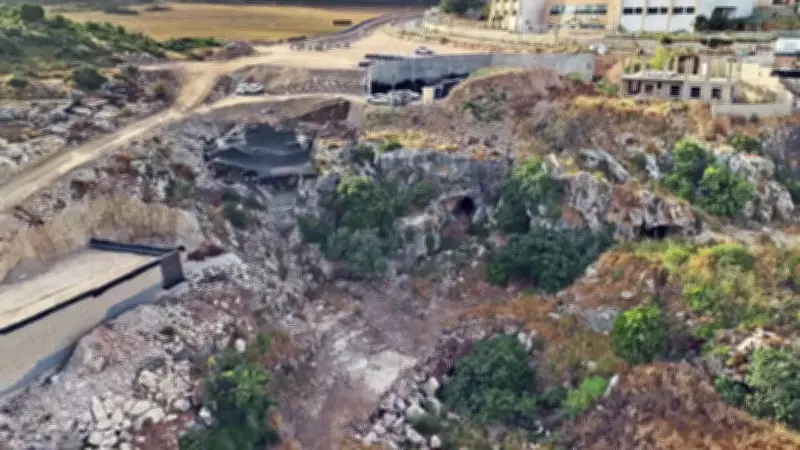
A stretch of hillside south of Haifa has yielded an unexpected window into a distant chapter of human history. Archaeologists working near the town of Fureidis are uncovering a prehistoric cave that remained closed off from the outside world for hundreds of thousands of years, preserving traces of a community that lived long before either Neanderthals or modern humans came to dominate the landscape.
An Unusually Intact Record of Prehistoric Life
The site, dated to somewhere between 400,000 and 250,000 years ago, offers an unusually intact record of life during a period that remains poorly understood. While many prehistoric locations have been disturbed by natural processes or later human activity, this cave appears to have remained largely untouched. That rare condition has left behind a remarkably clear archaeological archive, one that researchers believe could help fill important gaps in the story of human evolution in the Levant.
According to an official statement published by Israel's Ministry of Foreign Affairs, what initially drew attention was not only the age of the site but also its state of preservation. Layers of sediment accumulated over immense spans of time, sealing the cave and protecting evidence left behind by its former occupants. Within those deposits, archaeologists have begun recovering stone tools, animal remains and traces of repeated human activity. Unlike many prehistoric sites where evidence survives only in fragments, this location appears to retain a detailed sequence of occupation.

Prof. Ron Shimelmitz on the Cave's Significance
According to Prof. Ron Shimelmitz of the University of Haifa, the cave belongs to a period near the end of the Lower Palaeolithic, a stage that predates the widespread emergence of both Neanderthals and anatomically modern humans. He described it as a rare opportunity to examine a formative era in human development that is represented by only a small number of accessible sites across the region.
Evidence of Fire Use Discovered
Among the discoveries are flint implements produced using advanced manufacturing techniques for the period. Small handaxes, scrapers and blade-like tools have already been identified, suggesting a sophisticated approach to stone working. Animal remains found alongside the tools include bones from fallow deer, gazelles and ancient horses. Their presence hints at the kinds of environments that once surrounded the cave and offers insight into the hunting practices of the people who occupied it.
Evidence of fire has also emerged from the excavation. Hearths and traces of burning are often viewed as more than simple signs of survival. They can indicate repeated occupation, organised living spaces and shared social activities. In prehistoric contexts, fire frequently sits at the centre of daily life, shaping everything from food preparation to the transmission of knowledge within a group.
The Acheulo-Yabrudian Cultural Complex
The cave is associated with the Acheulo-Yabrudian cultural complex, a prehistoric tradition known from a limited number of sites in the Levant. This cultural phase occupies an intriguing position in human history, sitting between earlier stone tool industries and those that followed during the Middle Palaeolithic. In a statement released on 11 June 2026, the Israeli Ministry of Foreign Affairs noted that this was a time when important shifts were beginning to take shape. Human groups appear to have spent longer periods in the same locations rather than moving constantly across the landscape. Settlements became more enduring, social interactions may have grown more complex, and technological practices showed increasing refinement.
Prof. Shimelmitz suggests that many of the behaviours emerging during this era foreshadowed developments later associated with both Neanderthals and modern humans. Larger social groups, greater cooperation and more consistent sharing of knowledge may all have roots in these earlier communities.

What the Cave's Preserved Layers Reveal
Excavations of prehistoric caves often raise as many questions as they answer, yet the condition of this site offers unusual possibilities. Because the deposits have remained relatively undisturbed, researchers can examine the relationship between artefacts, animal remains and living areas with far greater precision. Dr Kobi Vardi of the Israel Antiquities Authority notes that locations preserved to this degree are exceptionally uncommon. The cave's archaeological layers may allow specialists to reconstruct aspects of daily life that are normally difficult to detect, from hunting patterns and resource use to movement within the site itself.
The nearby presence of water sources may also help explain why ancient hunter-gatherer groups repeatedly returned to the area. Reliable access to water, combined with animal populations and natural shelter, would have made the landscape attractive for long-term occupation.
Reconstructing Life 300,000 Years Ago
Work at the site is still in its early stages, and researchers expect years of analysis to follow. Studies of animal bones, stone tool production and the spatial arrangement of archaeological features are expected to provide a clearer picture of how people adapted to their surroundings during this transitional period. A broader research programme is now being developed by the Israel Antiquities Authority and the University of Haifa with the aim of building a more detailed understanding of human life in the region hundreds of thousands of years ago. The findings could shed light on how technological innovation, social organisation and environmental adaptation evolved before the appearance of the human groups most familiar to us today.
There is also hope that, once scientific work has progressed sufficiently, the cave may eventually be opened to visitors. If that happens, a place sealed away for roughly 300,000 years could become one of the region's most valuable links to a world that existed long before recorded history began.