

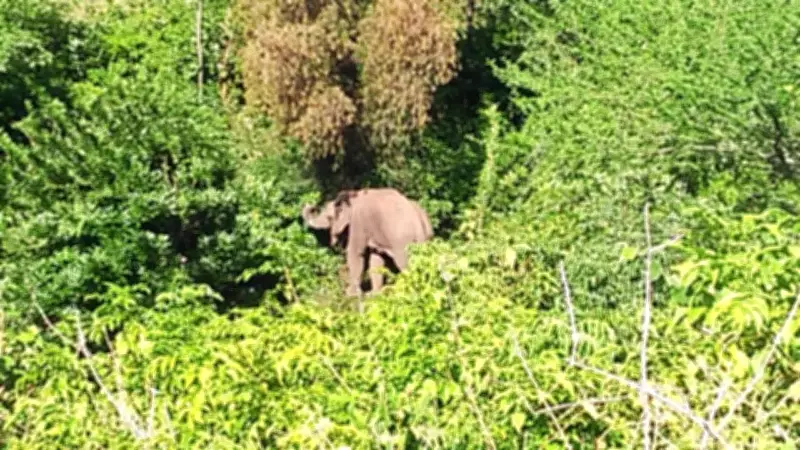
A recent study has revealed that anthropogenic activities and infrastructure development led to the deaths of 1,653 wild elephants in India between 2009 and 2025. The primary causes identified include electrocution, train collisions, and poaching. These findings are especially significant as India hosts nearly 60% of the global Asian elephant population.
Electrocution Leading Cause
Electrocution emerged as the foremost cause, accounting for 1,105 fatalities during the study period. The highest numbers of electrocution deaths were reported from Odisha, Karnataka, Assam, Tamil Nadu, and West Bengal.
Train Collisions and Poisoning
Train collisions claimed 225 elephants, with Assam recording the highest toll at 82 deaths, followed by West Bengal with 62. Poisoning resulted in 79 deaths nationwide, with Assam again reporting the highest figure at 45, and Odisha following with 15.

Poaching Statistics
Poaching accounted for 214 elephant deaths, with Odisha reporting the highest number at 66. Other states with significant poaching incidents include Assam (27), Kerala (24), Meghalaya (23), Karnataka (22), and Tamil Nadu (22).
Human Casualties From Elephant Conflicts
The study also examined human fatalities arising from conflicts with elephants. Between 2009 and 2025, a total of 7,868 human deaths were recorded across 16 elephant-range states. Odisha recorded the highest number at 1,495, followed by West Bengal (1,306), Jharkhand (1,205), and Assam (1,161). These four states together accounted for nearly 70% of all reported human deaths.
Factors Driving Conflicts
The analysis highlighted that human fatalities are not directly proportional to elephant population size. States with relatively smaller elephant populations, such as Odisha, Jharkhand, West Bengal, and Chhattisgarh, recorded disproportionately high human deaths compared to southern states like Karnataka, Tamil Nadu, and Kerala, which have much larger elephant populations. A senior conservation scientist noted that extensive forest fragmentation is a major factor driving these conflicts, particularly in Jharkhand, Chhattisgarh, and Odisha, where combined elephant numbers are only around 2,000 to 3,000.
Recommendations
The study calls for policy shifts including decentralised conflict governance, time-bound compensation mechanisms, and greater community oversight. It also recommends that roads, railways, mines, and power infrastructure incorporate elephant-safe designs from the planning stage. Additional suggestions include performance-based mitigation measures, targeted interventions in conflict hotspots, and strengthening support systems such as ex gratia payments, early-warning mechanisms, training programmes, and revised operational guidelines.
According to the latest DNA-based population estimation, India's elephant population stood at 22,446 during the 2021–2025 period.






