

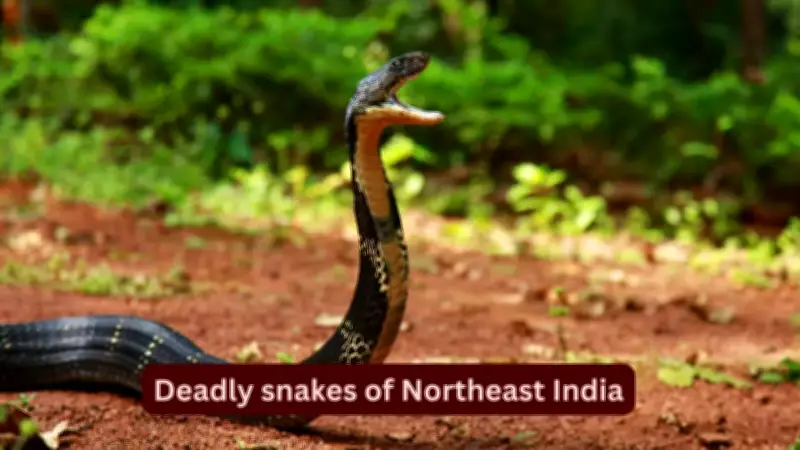
Northeast India is one of the most beautiful and biodiverse regions in Asia. The seven states, namely Arunachal Pradesh, Assam, Nagaland, Manipur, Mizoram, Meghalaya, Tripura, and Sikkim, are blessed with lush forests that are home to over a dozen venomous snake species. The rainforests, bamboo groves, and mountain forests create perfect habitats for some of India's most dangerous reptiles. According to researchers, Northeast India hosts more than 20 species of medically important venomous snakes.
For wildlife enthusiasts and adventure travellers, spotting a snake can be a thrilling experience. However, it is crucial to know which species inhabit which forests and how to stay safe. Here is a look at 10 deadly snakes found in the region.
1. King Cobra
The king cobra is the world's longest venomous snake, capable of growing over 5 metres in length. It can be found across the forests of Assam, Arunachal Pradesh, Nagaland, and parts of Meghalaya. Its main habitats include Kaziranga, Namdapha National Park, Pakke Tiger Reserve, and forests in Nagaland and Arunachal Pradesh. Travellers should know that king cobras generally avoid humans and are shy. If you spot one, remain calm and maintain a safe distance. Do not attempt photography from close range.

2. Monocled Cobra
The monocled cobra is one of the most common venomous snakes in Northeast India and is responsible for several snakebite incidents in Assam. Its venom is highly neurotoxic and can cause respiratory failure. This species is mainly found in forests of Assam, Tripura, Mizoram, and Nagaland. Travellers should be cautious around campsites and homestays near forests, as these snakes are active during dusk and night.
3. Indian Cobra
The Indian cobra is an iconic snake distributed across parts of Northeast India, often encountered around forest edges and villages. Its main habitats include villages in and around Assam and Tripura. To avoid encounters, never place your hands into rock crevices or hollow logs, as these are common hideouts for the Indian cobra.
4. Common Krait
The common krait is among the deadliest snakes in India. Its bite may feel painless, but the venom attacks the nervous system, potentially leaving the victim paralysed. It inhabits grasslands, forests, and agricultural lands across Assam and other states. Most bites occur at night, so avoid venturing out after dark without a torch.
5. Banded Krait
The banded krait is visually striking with its yellow-and-black bands, but it is highly venomous, possessing powerful neurotoxic venom. It is found in Assam's wetlands, forests, riverbanks, and foothill regions. If you spot one, give it space to move and do not follow it for photographs or videos.
6. Greater Black Krait
The greater black krait is among the most dangerous snakes in Northeast India. Its venom can cause paralysis and respiratory complications. Assam has one of the highest recorded sightings of this species in India. It is largely nocturnal, so avoid venturing out alone at night.
7. Lesser Black Krait
The lesser black krait is smaller than its larger cousin but equally dangerous. It is medically significant and often mistaken for harmless black snakes. Found in forests of Assam, travellers should never walk barefoot around camps and forests to avoid accidental bites.
8. Green Pit Viper
Green pit vipers are largely tree-dwellers and masters of camouflage. Their bites can cause severe bleeding. Northeast India is home to several species of green pit vipers, mainly in forests of Assam, Arunachal Pradesh, Meghalaya, and Nagaland. Do not touch anything that looks green, as these snakes blend perfectly into foliage.
9. Salazar's Pit Viper
Salazar's pit viper is a recently discovered species named after a famous fictional wizard. It is now one of Northeast India's most famous reptiles. Its main habitat is Arunachal Pradesh and neighbouring forested regions. This species blends perfectly into green foliage, so be vigilant when hiking in jungles.

10. Suzhen's Krait
Suzhen's krait is among the newest venomous snakes, recently found on the Nagaland-Manipur border region. It possesses potent neurotoxic venom. Its main habitat includes Nagaland, Manipur border forests, and adjoining mountain landscapes. Since this snake is not completely understood or studied, it should be avoided at all costs.





