

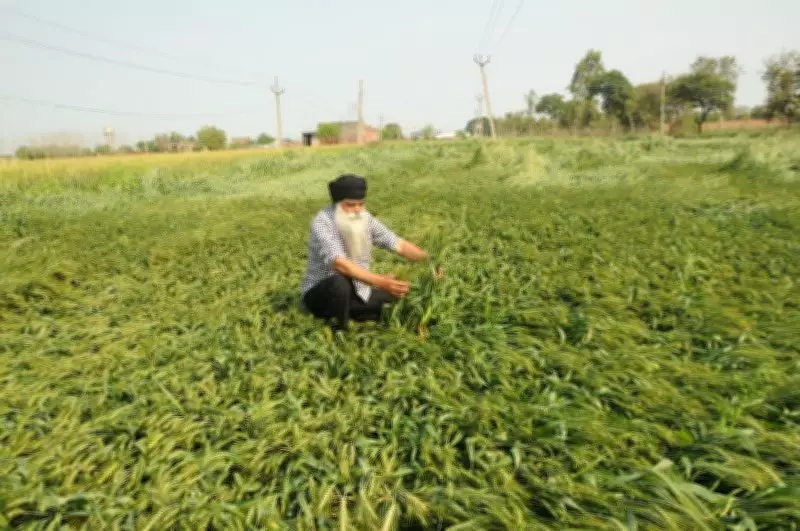
Punjab Wheat Crop Exhibits Violet Coloration Amid Rising Temperatures
In a surprising development across Punjab's agricultural landscape, wheat crops have begun displaying a distinct violet hue, sparking concerns among farmers about potential yield losses. The phenomenon, attributed to heat stress from elevated temperatures this season, has prompted widespread surveys and expert assessments to evaluate crop health.
PAU Vice-Chancellor Addresses Farmer Anxieties
Dr. Gosal, Vice-Chancellor of the Punjab Agricultural University (PAU), has stepped forward to calm fears, emphasizing that the violet coloration is a natural response linked to this year's higher temperatures. He clarified that since temperatures have not exceeded the critical threshold of 35°C, the wheat crop remains fundamentally safe and viable.
"Although temperatures have been four to five degrees above the usual averages, they are still within safe limits," Dr. Gosal stated. "The real risk to wheat arises only when temperatures cross 35 degrees Celsius during February and early March." He further explained that the violet appearance is an inherent property of certain wheat varieties and not indicative of disease or severe damage.

Expert Recommendations and Additional Crop Concerns
Dr. Makhan Singh Bhullar, Director of Extension Education at PAU, had previously advised farmers to implement light irrigation techniques. This strategy helps cool the crop canopy and mitigate stress, offering a practical measure to support plant resilience during warmer periods.
Adding to the discussion, Hardeep Singh Sabhikhi, director of KVK Rauni in Patiala, warned farmers against applying fungicides upon noticing the violet pigmentation on wheat glumes. "This is not a disease," he asserted, noting that some farmers had already sprayed their crops without consulting agricultural scientists. PAU teams conducted extensive state-wide surveys, confirming the absence of pathogenic issues.
Dr. Gosal also addressed reports of aphid attacks in some wheat fields, suggesting that these insects might actually play a beneficial role by controlling red bug infestations that typically emerge at this growth stage. He reassured that the crop has largely passed the vulnerable damage phase.
Meteorological Context and Broader Implications
According to the Indian Meteorological Department's monthly advisory, both minimum and maximum temperatures across northwest India, including Punjab, remained above normal throughout February and March. Concurrently, rainfall levels were below average, exacerbating heat-related stress on crops.
This incident highlights the ongoing challenges faced by Punjab's agricultural sector in adapting to climatic variations. While the violet wheat has caused initial alarm, expert consensus underscores the importance of scientific guidance and avoiding premature interventions that could harm crop health.






