

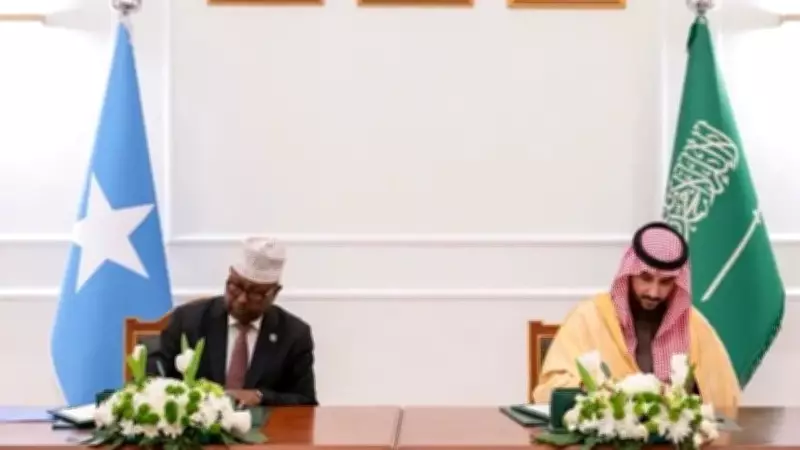
Somalia and Saudi Arabia Forge New Defense Partnership
Somalia has entered into a significant defense agreement with Saudi Arabia, marking a deepening of military ties between the two nations. This development occurs as the Horn of Africa increasingly becomes a focal point for regional rivalries among Gulf states, drawing strategic interest due to its location along vital global trade routes.
Agreement Signed in Riyadh Amid Strategic Shifts
On Monday, Somali Defense Minister Ahmed Moallim Fiqi and Saudi Defense Minister Prince Khalid bin Salman formalized a "military cooperation agreement" in Riyadh. The Somali defense ministry announced the signing via a post on X, emphasizing that this pact enhances defense and military collaboration across various areas of mutual interest.
The agreement was signed on the sidelines of the World Defense Show 2026 in Riyadh, though specific details remain limited. According to reports, it focuses on cooperation in training, technical assistance, and defense support. Mogadishu aims to bolster the capabilities of the Somali National Armed Forces and protect its airspace and territorial integrity through this partnership.

Context of Regional Tensions and Alliances
This defense pact comes approximately six weeks after Israel's recognition of Somaliland, a self-declared republic that broke away from Somalia in 1991 but is still claimed by Mogadishu as part of its sovereign territory. Somali President Hassan Sheikh Mohamud has criticized this move, labeling it as interference that undermines regional stability.
Somalia has linked the need for new defense partnerships to broader regional dynamics, including Red Sea security concerns and diplomatic actions related to Somaliland. The agreement with Saudi Arabia is portrayed by Mogadishu as an effort to garner support from allies that recognize Somalia's sovereignty and territorial unity.
Gulf Rivalries and Shifting Alignments
The signing occurs against a backdrop of complex regional rivalries, particularly between Saudi Arabia and the United Arab Emirates (UAE). Once close allies, these Gulf monarchies are now openly at odds over issues in Sudan and Yemen, with their alliance fracturing since their joint efforts against Iran-backed Houthis in 2014.
The UAE has invested heavily in Somaliland, with Emirati firm DP World developing the Berbera port, which operates with limited regard for Somalia's federal government, according to Mogadishu. Additionally, Abu Dhabi faces allegations of backing Sudan's Rapid Support Forces, claims it has repeatedly denied.
Somalia has recently terminated defense and security agreements with the UAE while expanding cooperation with other partners, such as Qatar. Officials describe the Saudi agreement as a framework rather than a mutual defense treaty, with further implementation expected through follow-up arrangements.
Strategic Implications for the Horn of Africa
Saudi Arabia, which signed a defense pact with Pakistan last year, remains a key security player in the Red Sea and Horn of Africa region. This cooperation with Somalia positions Riyadh firmly alongside Mogadishu at a time when sovereignty disputes and external involvement are under intense scrutiny.
The Horn of Africa's strategic importance cannot be overstated, as it lies along one of the world's busiest trade routes between the Indian Ocean and the Suez Canal. This has drawn growing interest from Gulf states, making the region a theatre for competing influences and alliances.
As Somalia seeks to strengthen its military capabilities and assert its territorial claims, this defense agreement with Saudi Arabia represents a significant step in navigating the complex geopolitical landscape of the Horn of Africa.






