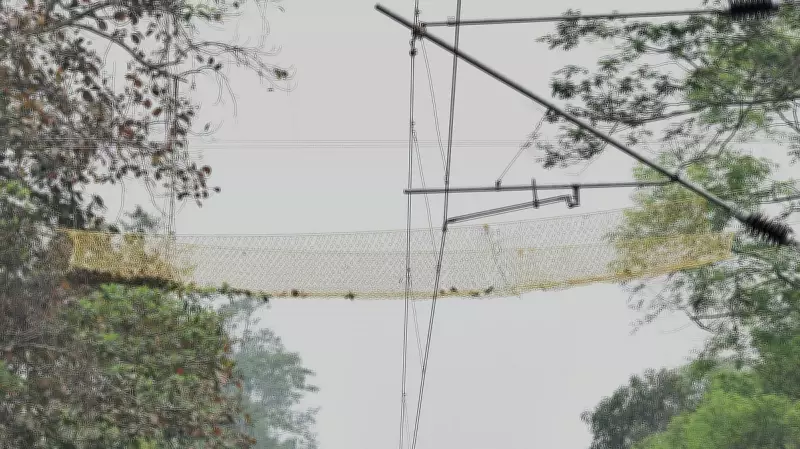
In a groundbreaking observation, a primate has been documented using a canopy bridge to safely cross a railway line at Assam's Gibbon Wildlife Sanctuary. The Wildlife Institute of India (WII) has confirmed that this is the first such instance recorded anywhere in the world.
Details of the Sighting
The event was captured by camera traps installed as part of a study on wildlife movement and infrastructure impact. The footage shows a primate, identified as a Hoolock gibbon, carefully traversing a rope bridge suspended over the railway tracks. This canopy bridge was specifically designed to help arboreal animals cross linear infrastructure like roads and railways without descending to the ground.
Significance of the Observation
According to WII scientists, this behavior marks a major milestone in wildlife conservation. It demonstrates that artificial canopy bridges can effectively mitigate the risks posed by railways to tree-dwelling species. The Hoolock gibbon is an endangered primate found only in the northeastern regions of India, Bangladesh, and Myanmar. Railway lines cutting through their habitats often lead to fatalities or habitat fragmentation.

The Gibbon Wildlife Sanctuary, located in Assam's Jorhat district, is a critical habitat for several primate species. The canopy bridge was installed as part of a collaborative project between the WII, the Assam Forest Department, and the Indian Railways to reduce animal-vehicle collisions and promote safe wildlife passage.
Implications for Conservation
This first-ever documented use of a canopy bridge by a primate highlights the potential of such structures in conserving arboreal wildlife. The WII team plans to expand the network of canopy bridges across other vulnerable areas. They also aim to study the long-term effectiveness of these bridges in maintaining genetic connectivity among primate populations.
Experts believe that this success story could serve as a model for other regions facing similar challenges. The use of canopy bridges is already being explored for other species, including squirrels, civets, and birds. The initiative underscores the importance of integrating wildlife-friendly infrastructure in development projects.