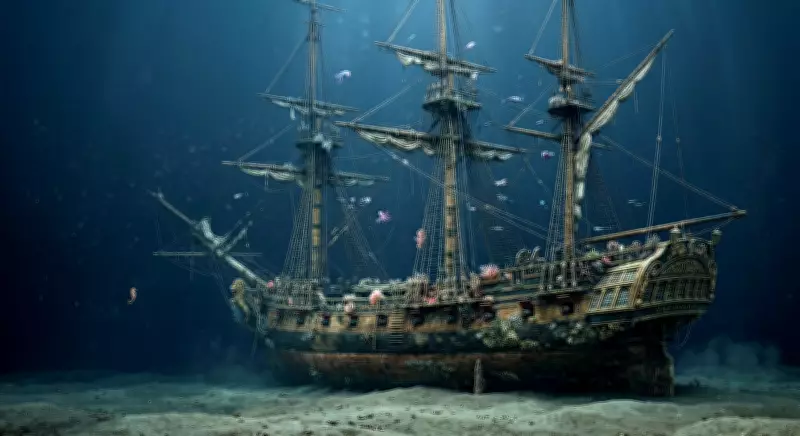
It began as a faint anomaly on a screen. In 2017, a fiber-optic cable survey team working in Lake Ontario detected an unusual shape resting on the lakebed between Buffalo and Toronto. Initially overlooked, the find prompted a deeper investigation when divers finally descended to explore. What they encountered was astonishing: a perfectly preserved 19th-century sailing ship upright in the darkness, its masts still pointing toward the surface, as if it had sunk only recently.
A Discovery Unlike Any Other
This was no accidental find. The anomaly was identified during a commercial survey, but confirming its identity required years of effort, specialized equipment, and the expertise of archaeologist James Conolly from Trent University. According to NOAA's Lake Ontario sanctuary planning documents, targeted survey operations are essential because historical records often miss entire chapters of what lies on the lakebed. Sites can remain undiscovered for generations, not because they have been destroyed, but because no one has looked with the right tools. Without that initial cable survey, this ship might have stayed hidden for another century.
What Lies Beneath
The wreck rests approximately 300 feet below the surface, a depth that has shielded it from recreational divers, boat anchors, and most human interference. This isolation is the key to its survival. All masts remain standing, the deck cabin is intact, and railings are still in place. The vessel is pristine, a single piece of history frozen in time.

Initially believed to be the Rapid City, a two-masted schooner built in 1884 that sank in a storm near Toronto in 1917, divers soon realized this ship was much older. The rigging consists of rope rather than metal cable, which only became common after the 1850s. The vessel also lacks a centerboard winch and a stern wheel, features that became standard in the latter half of the 19th century. The best estimate places its construction between 1800 and 1850. Its identity remains unknown, earning it the title of the unidentified ghost ship of Lake Ontario, frozen in time since the early 1800s.
The Great Lakes as a Time Capsule
Many historic ships survive in the Great Lakes while similar ocean wrecks have long decayed, thanks to cold freshwater and low oxygen levels. Saltwater accelerates decay, but cold freshwater slows it dramatically, especially at great depths. According to NOAA's Great Lakes preservation records, Lake Ontario alone contains nearly 70 known historic shipwrecks, each a tangible record of trade routes, migration patterns, and the dangers of sailing before GPS and weather satellites. These wrecks are not just artifacts; they are data points that reveal how early America and Canada functioned economically. The Lake Ontario wreck is rarer than most—a ship this old, this intact, with both masts still standing, is an extraordinary find.
Beyond the Spectacle
While images of the sunken ship are captivating, maritime archaeologists emphasize the scientific value. A surviving hull from the early 1800s can teach researchers about shipbuilding techniques, tools, cargo handling, and even the vessel's final moments. The older the ship, the thinner the historical record, making physical finds like this irreplaceable. However, there is a pressing concern: the wreck is now covered in quagga mussels, an invasive species that has spread throughout the Great Lakes and is slowly consuming the ship's wooden details. A wreck that remained intact for centuries may now face irreversible biological damage within decades. Plans are underway for a more comprehensive dive in the 2026 season, including 3D imaging and wood sampling for dating.
A Broader Perspective
The Great Lakes are shared by eight US states and represent one of the largest freshwater systems on Earth. They also sit atop one of the most important underwater archaeological archives in North America, and we are only beginning to understand its depths. This discovery is more than a fascinating tale of a ship no one knew existed. It is a reminder that some of history's most significant finds are not hidden in distant oceans or exotic locations. They rest quietly in waters where millions of Americans live, waiting for someone with the right tools to take a closer look.