

The Enigmatic Okapi: Nature's Masterpiece of Camouflage and Adaptation
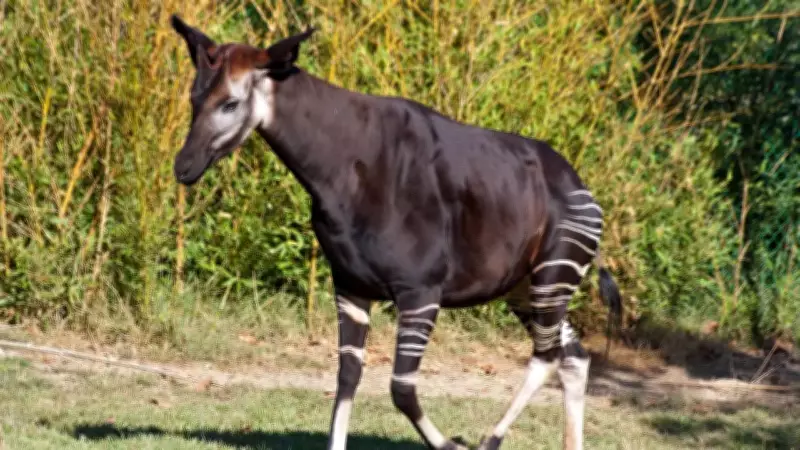
Deep within the impenetrable rainforests of the Democratic Republic of the Congo resides one of nature's most extraordinary and elusive creatures: the okapi. At first glance, this remarkable mammal appears as though an artist whimsically combined features from multiple animals, creating a living mosaic with the striped hindquarters of a zebra, the elongated face of a giraffe, and the graceful body of an antelope.
A Living Fossil Connection
Scientific research has unveiled a surprising evolutionary relationship that remained hidden for centuries. Through meticulous anatomical studies and advanced DNA analysis, researchers have conclusively determined that the okapi represents the closest living relative to the majestic giraffe. This revelation astonished the scientific community, given the dramatic visual differences between the two species.
Both animals belong to the Giraffidae family, sharing fundamental biological characteristics despite their contrasting appearances. The okapi possesses a notably elongated neck, though significantly shorter than its towering cousin's. Perhaps most remarkably, both species share an extraordinary tongue adaptation—a flexible, muscular organ capable of extending up to 30 centimeters to deftly strip leaves from branches, pluck tender buds, and even perform delicate self-grooming tasks.

Master of Forest Survival
The okapi has evolved into a perfect embodiment of rainforest adaptation. Its distinctive black-and-white striped hind legs serve a crucial survival function beyond mere aesthetics. As dappled sunlight filters through the dense forest canopy, creating shifting patterns of light and shadow, these stripes effectively break up the animal's silhouette, providing exceptional camouflage against potential predators.
This visual deception proves vital in an environment where visibility rarely extends beyond a few meters. The okapi complements this visual stealth with oversized, highly mobile ears that can rotate independently, capturing the faintest sounds of approaching danger. This acute auditory awareness helps detect their primary natural predator: the stealthy leopard.
Solitary Yet Communicative Existence
Okapis lead predominantly solitary lives, moving with deliberate, measured steps through their forest domain. Their careful, quiet foraging minimizes noise that might attract predators while allowing them to consume hundreds of different plant species, including leaves, fruits, fungi, and tender buds.
Despite their solitary nature, okapi mothers maintain close bonds with their calves through sophisticated communication. They utilize low-frequency vocalizations that fall below the hearing range of most predators, enabling them to stay connected without revealing their locations. This subtle communication system represents another layer of their remarkable adaptation to forest life.
Discovery and Conservation Challenges
While indigenous Congolese communities have known about okapis for generations, the scientific world only formally documented the species in 1901 through the work of British explorer Harry Johnston. Today, this unique creature faces significant survival challenges.
The International Union for Conservation of Nature classifies okapis as endangered, with habitat destruction representing their most severe threat. Rampant logging operations, expanding mining activities, and agricultural conversion steadily diminish their forest home. Although poaching occurs, it remains secondary to habitat loss as a conservation concern.
Protected areas like the Okapi Wildlife Reserve offer crucial sanctuaries, and ongoing scientific monitoring aims to track population trends and implement protective measures. The species demonstrates particular sensitivity to environmental changes, making conservation efforts increasingly urgent.
A Testament to Evolutionary Wonder
Beyond their striking appearance, okapis possess numerous specialized adaptations that enable their rainforest existence. Their neck muscles provide exceptional precision for selective feeding, while their compact, muscular bodies navigate dense undergrowth with surprising agility. Every aspect of their physiology reflects perfect adaptation to their specific ecological niche.

The okapi stands as a living testament to nature's boundless creativity and the hidden wonders within Earth's remaining wilderness areas. As the giraffe's closest living relative and a master of forest survival, this secretive mammal embodies the rich biological heritage of Central Africa's rainforests. Catching even a fleeting glimpse of an okapi in its natural habitat remains one of wildlife observation's rarest and most privileged experiences, reminding us of the precious biodiversity we must strive to protect.





