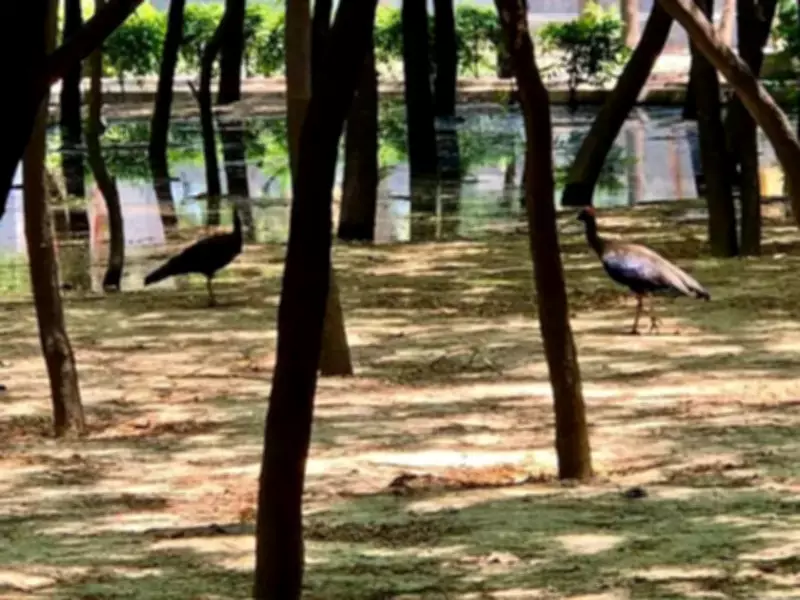
Noida: An 800 square metre greenbelt in Sector 117, quietly nurtured over the past three to four years by the Noida Authority and a group of residents, has begun attracting an unlikely cast of visitors — cranes, black ibises, and the occasional peacock. This zone, originally planned as a buffer between main roads and residential sectors, has transformed into a neighbourhood sanctuary.
Development of the Greenbelt
The greenbelt, approximately 40 metres wide, was developed by the Noida Authority's horticulture department starting in 2021-22. Residents of the sector took it further by planting shade-giving trees, including neem, peepal, and Lagerstroemia, alongside flowering species such as jarul, gulmohar, and kachnar, which are known to attract birds. They also added kaner, an evergreen shrub that blooms in red, pink, and white. The combined effect of dense foliage, cleaner air, and relative quiet has made the corridor hospitable to birds in ways that a conventional park might not.
Bird Sightings and Significance
Among the birds spotted in the area is the black ibis, also known as the red-naped ibis or Indian black ibis, typically found foraging in dry fields and wetlands. That it has taken to an urban greenbelt in a densely packed Noida sector is, for residents, a small marvel. Anand Mohan Singh, deputy director of the horticulture department at the Noida Authority, said the birds sighted in Sector 117 were previously spotted only near the Hindon, several kilometres away. "Having found lush greenery with big trees here, these birds have now started visiting the greenbelt, mostly during the afternoons," he said.

Maintenance and Challenges
Singh credited the 2021 plantation drive, carried out with community support, as the turning point. Sustained watering, weeding, soil aeration, and fertilising by the Authority have since transformed the area. He acknowledged, however, that several green spaces across Noida still required attention. Approximately 21% of the city's land has been designated as greenbelts and parks. Planned separately from recreational parks, these greenbelts were conceived as buffer zones between main roads and residential sectors, planted with large trees and grass to reduce vehicular pollution and enhance the neighbourhood's aesthetic appeal. In practice, however, many, particularly those along prime sectors and densely populated neighbourhoods, have struggled due to dried-up grass, lack of maintenance, and dumping of horticultural and construction debris. Encroachments by vendors, dhobis, and electrical installations, such as generators, further undermine what these spaces were meant to be.
Resident Perspectives
But for Sector 117 residents, who have no dedicated park, the greenbelt is a place to walk, breathe, and, on a quiet afternoon, watch a black ibis pick its way through the undergrowth. "Sector 117 does not have a single park," Kosinder Yadav, president of the sector's residents' welfare association, told TOI. "The greenbelt is located near gate number 1 of the sector. While peacocks had made occasional appearances even earlier, we started spotting the black ibis about a month back," he added. Avdesh Kumar Pathak, another resident of the sector, takes his morning and evening walks in the greenbelt. "The greenery is soothing, and there is a marked temperature difference — it is 1-2 degrees Celsius cooler here than in the rest of the sector," he said.