

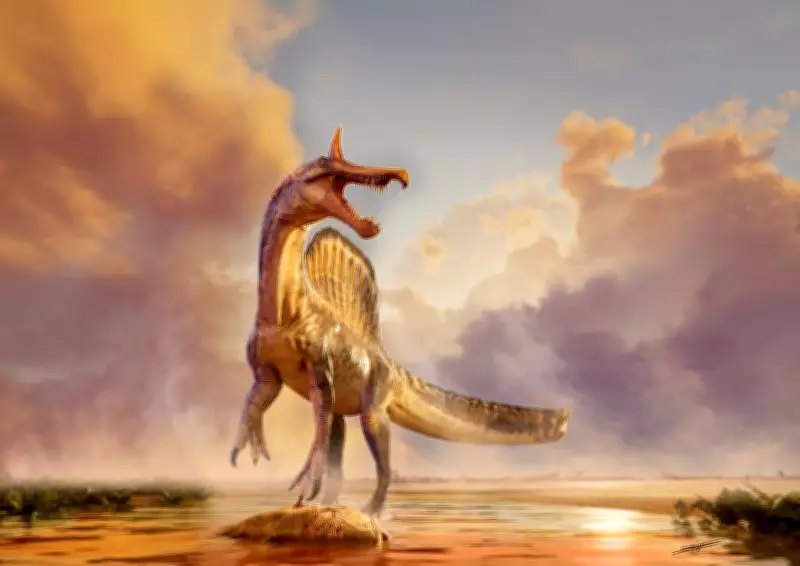
New Giant Spinosaurus Species Unearthed in Niger
In a groundbreaking paleontological discovery, researchers have excavated fossils of a previously unknown species of Spinosaurus, a colossal dinosaur, from the arid landscapes of Niger in Africa. This remarkable find is poised to significantly enhance our understanding of prehistoric life and the evolutionary pathways of apex predators during the Cretaceous period.
Details of the Fossil Discovery
The unearthed fossils include well-preserved skeletal remains, such as vertebrae, limb bones, and distinctive neural spines, which are characteristic of the Spinosaurus genus. These remains indicate that this newly identified species was an immense creature, potentially rivaling or exceeding the size of other known Spinosaurus specimens, which could reach lengths of up to 50 feet and weigh several tons.
The discovery site in Niger is located within a geological formation rich in Cretaceous-era deposits, dating back approximately 95 to 100 million years. This region has previously yielded other significant dinosaur fossils, but the identification of a new Spinosaurus species marks a pivotal moment for African paleontology, highlighting the continent's role as a hotspot for dinosaur diversity.

Implications for Science and Evolution
This finding provides critical insights into the ecology and behavior of Spinosaurus, a dinosaur renowned for its semi-aquatic lifestyle and unique adaptations, such as a sail-like structure on its back and elongated jaws suited for catching fish. The new species may exhibit variations in these features, suggesting adaptations to specific environmental conditions in ancient Niger.
Paleontologists involved in the study emphasize that analyzing these fossils could reveal more about:
- The dietary habits and hunting strategies of Spinosaurus.
- Its interactions with other prehistoric fauna in African ecosystems.
- How climate and geography influenced dinosaur evolution on the continent.
Furthermore, this discovery underscores the importance of continued fossil exploration in understudied regions like Niger, which may hold keys to unlocking mysteries of Earth's distant past.
Broader Impact on Paleontology
The unearthing of this new Spinosaurus species not only adds to the growing catalog of dinosaur diversity but also fuels scientific curiosity and public interest in natural history. It serves as a reminder of the dynamic and ever-evolving nature of paleontological research, where each new find can reshape our perceptions of prehistoric life.
As researchers conduct further analyses, including comparative studies with other Spinosaurus fossils from North Africa and beyond, the scientific community anticipates that this discovery will contribute to a more comprehensive narrative of dinosaur evolution and extinction events.






