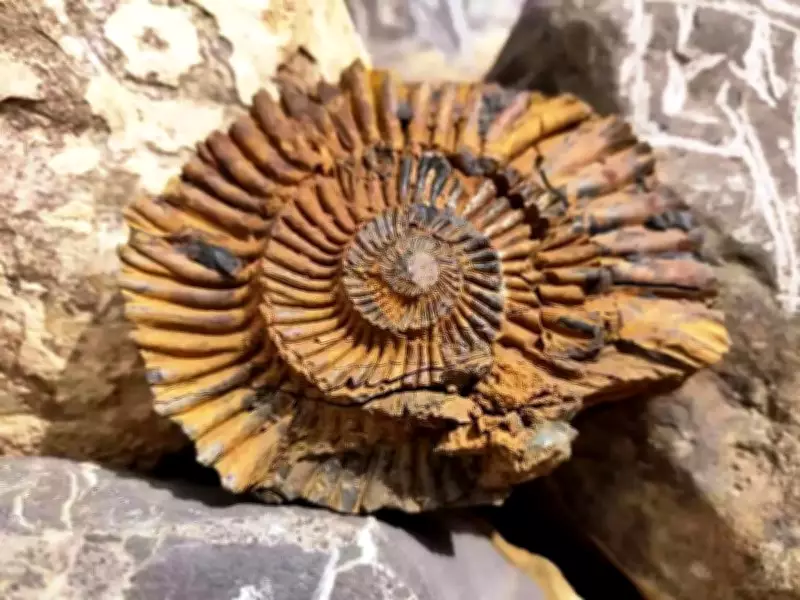
Langza, a picturesque village in Himachal Pradesh's Spiti Valley, has been officially included in India's geo-heritage map. This recognition highlights the village's unique geological formations and its rich repository of marine fossils, which date back millions of years.
Geological Significance of Langza
Nestled at an altitude of approximately 14,000 feet, Langza is renowned for its ancient marine fossils, including ammonites and belemnites. These fossils provide crucial insights into the region's prehistoric past when the area was submerged under the Tethys Sea. The village's landscape is dominated by rugged terrains, sedimentary rocks, and stunning vistas of the surrounding mountains.
Recognition and Conservation Efforts
The inclusion in the geo-heritage map is expected to boost conservation efforts and promote sustainable tourism in the region. Local authorities, along with geological experts, have been working to preserve the fossil sites and educate visitors about their importance. The Geological Survey of India (GSI) has played a key role in identifying and cataloging the geo-heritage sites across the country.

Impact on Tourism and Local Economy
This recognition is likely to attract more tourists, researchers, and geology enthusiasts to Langza. The village, already a popular stop on the Spiti Valley circuit, will now gain additional prominence. Local communities are hopeful that this will lead to economic benefits through eco-tourism and related activities. However, there is also a focus on ensuring that tourism does not harm the fragile ecosystem.
Geo-Heritage Sites in India
India has a diverse range of geo-heritage sites, from the Lonar Crater in Maharashtra to the Siwalik Hills in the Himalayas. The addition of Langza adds to the list of protected geological landmarks. The GSI has identified over 30 geo-heritage sites across India, each with unique features that tell the story of the Earth's evolution.
Preserving the Past for the Future
The recognition of Langza as a geo-heritage site underscores the importance of preserving natural history. It serves as a reminder of the dynamic geological processes that have shaped the Indian subcontinent. With proper management, Langza can become a model for sustainable geo-tourism, balancing visitor interest with conservation needs.
In conclusion, Langza village's entry into India's geo-heritage map is a significant milestone for Himachal Pradesh. It not only acknowledges the region's geological wealth but also paves the way for responsible exploration and education. As more people discover the wonders of Langza, it is hoped that they will also become ambassadors for its preservation.