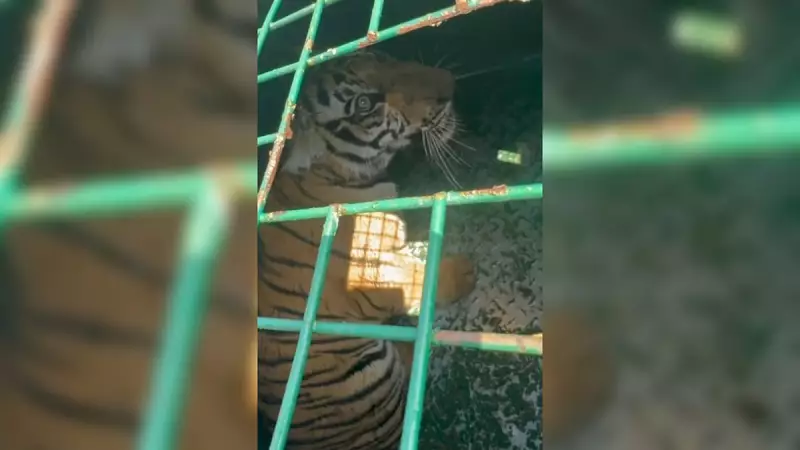
In a significant wildlife conservation effort, the Karnataka Forest Department has successfully rescued a 10-month-old female tiger cub in the Chamarajanagar district. This operation marks a critical step in managing human-wildlife conflict in the region while ensuring the safety of both animals and local communities.
Operation Launched After Tigress and Cubs Sighted Near Villages
The Forest Department personnel initiated this rescue mission over a month ago, following multiple reports of a tigress and its four cubs being sighted in and around Nanjadevanapura and surrounding villages. These sightings created considerable panic among residents, as the presence of tigers in populated areas raised immediate safety concerns. The department acted swiftly to address the situation, deploying teams to monitor the animals and plan a safe capture strategy.
Challenges and Strategies in the Rescue Effort
The rescue operation involved careful planning and execution to minimize stress to the tigers and avoid any harm. Forest officials used non-invasive techniques, such as tranquilizers and tracking, to locate and secure the cub. The 10-month-old female was found separated from its mother and siblings, prompting the need for urgent intervention to prevent potential dangers or starvation.

Key aspects of the operation included:
- Continuous surveillance of the tiger family's movements
- Coordination with local villagers to gather sightings and ensure public safety
- Use of veterinary expertise to safely tranquilize and transport the cub
Implications for Wildlife Conservation in Karnataka
This rescue highlights the ongoing challenges of human-wildlife coexistence in Karnataka, particularly in forested areas like Chamarajanagar. The state has been proactive in such efforts, with previous instances of tiger rescues and relocations to protect both endangered species and human populations. The successful capture of this cub is expected to reduce immediate threats in the village areas while allowing for the cub's rehabilitation and potential release back into the wild under controlled conditions.
Experts emphasize that such operations are crucial for maintaining ecological balance and preventing conflicts that can lead to tragic outcomes for both humans and animals. The Forest Department's swift response underscores Karnataka's commitment to wildlife conservation, even as urban expansion and deforestation continue to encroach on natural habitats.
Next Steps and Community Response
Following the rescue, the tiger cub is under veterinary care to assess its health and determine the best course of action. Options may include relocation to a protected reserve or integration with other tiger conservation programs. Meanwhile, the Forest Department continues to monitor the remaining tigress and cubs to ensure they do not pose further risks to nearby communities.
Local residents have expressed relief at the department's actions, though concerns about long-term solutions persist. Authorities are encouraging villagers to report sightings promptly and avoid confrontations with wildlife, promoting awareness campaigns on coexistence strategies.
This incident serves as a reminder of the delicate balance between development and conservation in India's biodiverse regions, with Karnataka setting an example through dedicated forest management and rescue initiatives.