

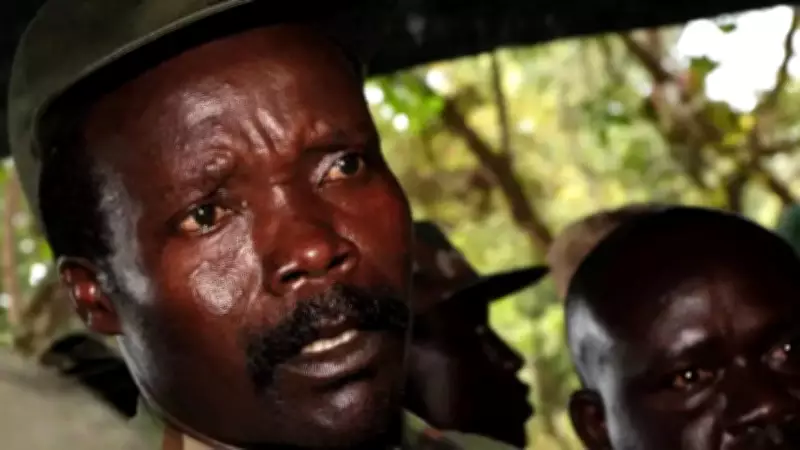
The Enduring Mystery of Joseph Kony's Freedom
For over three decades, the name Joseph Kony has represented one of Africa's most brutal and persistent nightmares. The Ugandan warlord, accused of orchestrating horrific atrocities against civilians, continues to evade capture despite international manhunts involving multiple nations. His ability to disappear into the continent's most ungoverned spaces has baffled security experts and raised profound questions about global justice.
The Rise and Reign of the Lord's Resistance Army
The story of Kony's Lord's Resistance Army (LRA) began in northern Uganda during the late 1980s. Initially presenting itself as a political movement fighting President Yoweri Museveni's government to protect Acholi interests, the group rapidly descended into notorious brutality. Their campaign devastated communities through:
- Systematic village attacks and destruction
- Mass abductions of children forced into soldiering and servitude
- Forced relationships between girls and LRA commanders
- Creation of humanitarian crises displacing nearly two million people
By the early 2000s, northern Uganda had become a landscape of Internally Displaced Persons camps, with researchers documenting what they termed "social suffering" on a massive scale.

The Fleeting Global Spotlight: Kony 2012 and Beyond
For years, this conflict remained largely unknown outside Africa. That changed dramatically in 2012 with the viral "Kony 2012" documentary that sparked global awareness. The movement generated unprecedented attention, with celebrities and politicians joining discussions, and the U.S. government offering a $5 million reward for Kony's capture. However, as the conflict's geography shifted and Kony remained elusive, international focus gradually diminished despite the International Criminal Court's outstanding arrest warrants for war crimes and crimes against humanity.
Geography as Sanctuary: The Borderlands Advantage
The primary factor enabling Kony's continued freedom is geography. His remaining followers operate in remote border regions spanning the Central African Republic, Sudan, and the Democratic Republic of Congo. These areas present unique challenges:
- Vast, sparsely populated territories with minimal government presence
- Dense forests and rugged terrain complicating military operations
- Poor cross-border coordination between nations
- Established networks of legal and illicit trade routes
This environment allows small groups to move freely between countries, hiding, resupplying, and gathering intelligence through local connections.
Strategic Adaptation: From Warfare to Survival
Today's LRA bears little resemblance to its former strength. Intelligence estimates suggest Kony commands only 12-20 loyal fighters, a dramatic reduction from thousands at the group's peak. Paradoxically, this smaller size enhances their elusiveness. Without large supply chains or organized camps, they leave minimal traces while moving quietly through forests.
The group has fundamentally shifted strategy from frequent attacks to survival-focused activities including:
- Small-scale farming and honey production
- Participation in cross-border trading networks
- Taxation of traders in controlled areas
- Barter with other armed groups and nomadic herders
This low-profile approach has proven effective even as international military pressure increased. Notably, in 2024, Russia-affiliated Wagner Group forces reportedly attempted to capture one of Kony's trading camps in eastern Central African Republic but failed.
Why the Hunt Has Lost Momentum
Multiple factors have reduced the urgency of capturing Kony:

- Diminished threat perception: The LRA remnants pose less immediate danger compared to other security challenges facing regional governments
- Resource constraints: Pursuing a small group through remote jungles is expensive and complex for Uganda, CAR, and DRC
- International priority shift: Global attention has moved to other conflicts and crises
- Operational challenges: The very factors that protect Kony make sustained military operations difficult
Despite these challenges, Joseph Kony's continued freedom represents an unresolved chapter in Africa's troubled history of conflict. His survival in the borderlands between Sudan and the Central African Republic serves as a testament to both the limitations of international justice and the enduring challenges of securing some of the world's most remote regions. As long as he remains at large, the question persists: can someone responsible for such widespread suffering truly escape accountability forever?





